
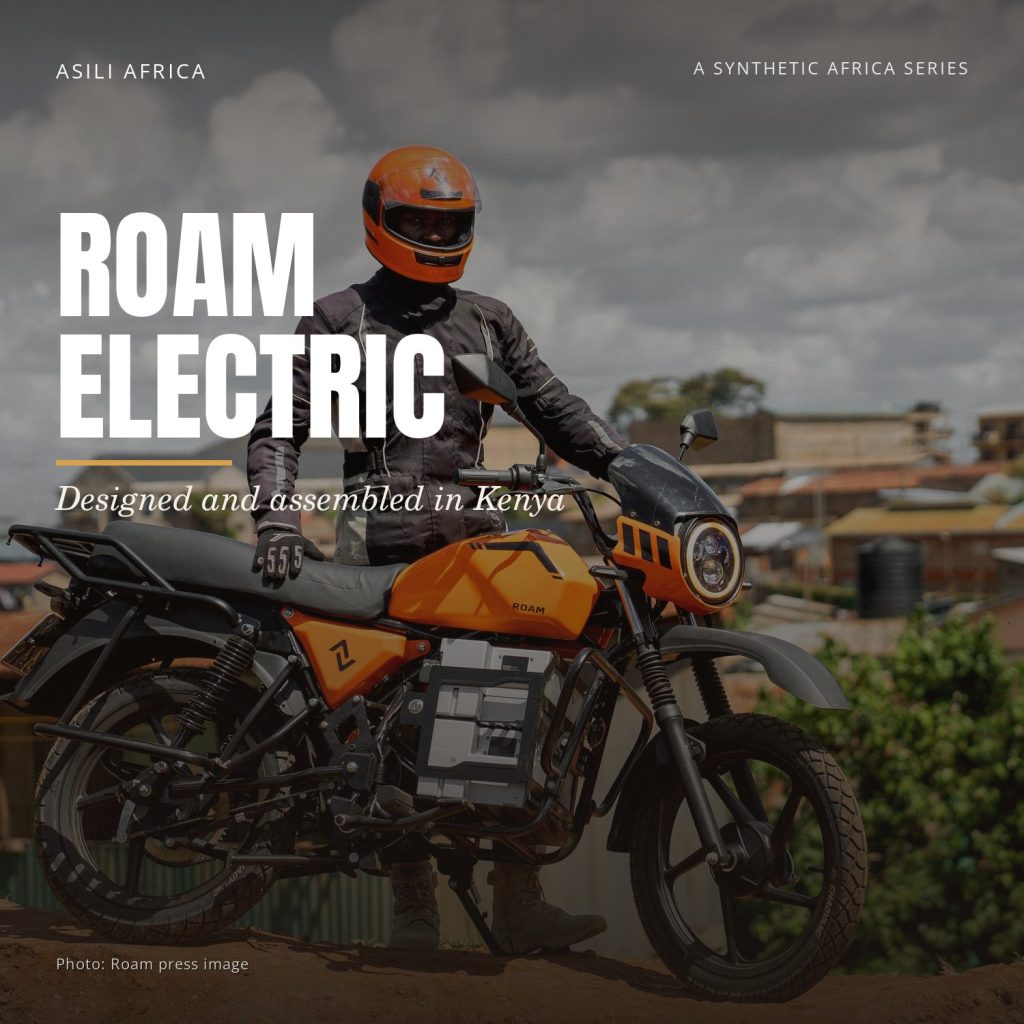
The Roam Electric Story: Two Swedish engineers built the only African EV company that actually manufactures
On the fifth of October, twenty twenty five, just after dawn, a single electric motorcycle rolled out of a factory gate on Mombasa Road in Nairobi, Kenya. There was no fanfare. No convoy. A rider named Michael Githuka pulled on a helmet, stowed a portable charger the size of a small suitcase, and pointed the front wheel north.
His destination was Addis Ababa, capital of Ethiopia, sixteen hundred kilometres away across some of the harshest terrain in East Africa. The Chalbi Desert. The high plateau north of Moyale. A country whose petrol stations, dead reliable for two thousand kilometres, would give way to a landscape of solar arrays, farm compounds, and any wall socket a rider could sweet talk his way into.
The motorcycle he was riding had been designed in Kenya. Assembled in Kenya. Financed, in part, by boda boda taxi drivers in Nairobi paying for it in daily instalments. Its battery pack was Chinese. Its idea was not.
This is the story of two Swedish engineering students who moved to Nairobi in twenty seventeen, refused to import anything, and quietly built the only African electric vehicle company that actually manufactures.
THE ORIGIN
The origin of Roam Electric does not begin in Africa. It begins in Sweden, in the autumn of twenty sixteen, at Linköping University, a research institution on the flat plains of Östergötland, about two hundred kilometres south of Stockholm. Three engineering students, enrolled in a masters programme in Energy, Environment, and Management, had been given what looked like a simple research question. Where in the world could electric mobility deliver the biggest impact.
Their names were Filip Lövström, Mikael Gånge, and Filip Gardler. Their answer, after months of research, was not California. Not China. Not Norway. Their answer was Kenya. And the reasoning went like this. Kenya had one of the fastest growing economies in sub Saharan Africa. Its transportation grid ran overwhelmingly on second hand vehicles imported from Japan, at enormous cost to the national fossil fuel bill. Its vehicle fleet was small enough that a switch to electric would not strand a huge installed base. And, most importantly, no one else was seriously building for that market. It was, in venture terms, open water.
In twenty seventeen, Filip Lövström and Mikael Gånge moved to Nairobi. Not as venture backed founders. Not as executives with a slick launch plan. They moved as students turned mechanics. Filip Gardler, the third member of the founding trio, would exit the company early. The two remaining Swedes rented an unremarkable warehouse in Nairobi. They gave their company an unremarkable Latin name. Opibus. Meaning, roughly, with resources. And they started work.
The first business was not motorcycles. The first business was safari vehicles. Opibus took internal combustion Toyota Land Cruisers, the workhorses of Kenya’s tourist industry, ripped out their diesel engines, and converted them into fully electric drivetrains. For a high end safari camp operating deep inside the Maasai Mara, this was a beautiful pitch. The vehicles ran quiet, which meant closer wildlife encounters. They emitted nothing, which meant cleaner air inside the reserve. They could be recharged from a solar array bolted onto the camp roof. And they cost about thirty seven thousand US dollars per conversion, which luxury tour operators charging thousands of dollars a night per tent could easily absorb.
By the end of twenty nineteen, Opibus had converted about ten Land Cruisers, including three inside the Maasai Mara. Any single one of those conversions could have been a founder’s whole career. But that was not the plan. For Lövström and Gånge, the safari business was a beachhead. A way to prove, to themselves, and to Kenyan regulators, and to eventual investors, that they could actually build things in Nairobi rather than assemble kits shipped from Shenzhen. That proof was the platform on which everything else would eventually stand.
THE STRUGGLE
By twenty twenty, Opibus was quietly profitable on safari conversions. It was also, by any reasonable startup measure, a boutique business. Ten vehicles a year, at forty thousand dollars a vehicle, is not the kind of business you take public. The founders knew it. And so they started asking the question every successful early stage company eventually has to answer. What was the largest thing they could possibly become.
The number they landed on was two million. Two million new petrol motorcycles were sold across Africa every year. In Nairobi alone, there were more than two hundred thousand boda boda taxis, the small motorcycle cabs that carried commuters through traffic no matatu could penetrate. Every single one of them ran on imported petrol. Every single one of them made noise. Every single one of them was, mile for mile, a candidate for electrification. If Opibus could build an electric motorcycle that cost less to run than a petrol one, and financed it in a way a Nairobi taxi driver could actually afford, the market was almost limitless.
But convincing that rider was the hardest part. A Nairobi boda boda driver in twenty twenty netted maybe five hundred to eight hundred Kenyan shillings on a good day. His single largest expense was petrol. His second largest was the loan on the motorcycle he did not yet own. And Opibus was proposing to sell him a new machine, of an entirely unfamiliar technology, for one hundred and eighty thousand shillings, roughly fifteen hundred US dollars. There was no consumer finance product on the market that would fund such a purchase for a rider whose bank statements would never survive a formal underwriting check.
The other struggle was capital. Climate technology venture funding, in the period from twenty seventeen through twenty twenty, was oriented toward Palo Alto and Berlin, not Nairobi. Opibus’s Series A would not close until early twenty twenty four. That is a seven year runway on seed capital and small climate grants, in a business that was building physical vehicles in a country where every component had to be sourced, tested, and re engineered for potholes, dust, humidity, and the peculiar habit of Nairobi boda boda riders of loading their small motorcycles with two full grown passengers, a sack of maize, and a chicken.
The supply chain had to be built from scratch. There were no Kenyan suppliers of electric vehicle frames. No Kenyan battery integrators. No wiring harness manufacturers accustomed to the specifications an electric motorcycle needed. Opibus built almost everything in house. Battery packs. Motor controllers. Frames. Bodywork. The pieces they could not build, they imported from China and re engineered for East African conditions. And they did all of it, for years, on cash flows from a small fleet of safari Land Cruisers running quietly across the Maasai Mara.
THE PIVOT
In twenty twenty two, everything changed. Opibus launched a purpose built electric motorcycle designed from the ground up for the East African boda boda market. It was called the Roam Air. It was priced at one hundred and eighty thousand Kenyan shillings. Its range, on a single battery, was about eighty kilometres. On a dual battery configuration, one hundred and sixty. It could be recharged, at any wall socket in Kenya, for about one hundred and fifty shillings, or roughly one US dollar.
In April of that same year, the company changed its name. Opibus, with its unmemorable Latin roots, became Roam. Simpler. Punchier. Easier to say in Kikuyu and Swahili and English. A brand made to sit on the tank of a Nairobi taxi, not on the door of a Silicon Valley corporate presentation.
In March of twenty twenty three, Roam opened its factory. Ten thousand square metres of production space off Mombasa Road, about ten kilometres from central Nairobi. The nameplate capacity was fifty thousand motorcycles a year. President William Ruto came in person to inaugurate the plant. The photographs from that day still hang on the walls of the Roam Park entrance. This was no longer a workshop. It was a factory. And it was a factory in Kenya, not in China.
Two months later, in May of twenty twenty three, Roam launched a solar powered charging and battery swap network called Roam Hubs. Twenty shillings an hour to swap. One hundred and fifty shillings for a full recharge. A rider could roll into a Roam Hub, hand over an empty pack, take a full one, and be back on the road in minutes. The Hub network was small at first. A few dozen locations. But it was the platform on which every future Roam motorcycle would rely.
And then Roam solved the finance problem. In April of twenty twenty four, Roam announced a partnership with M-KOPA, the pay as you go finance company that had already put millions of solar home systems into East African households, and with Bolt, the European ride hailing platform. The three companies together offered a Roam Air to any Bolt driver in Nairobi, on twenty five thousand shillings down, and daily payments of about five hundred shillings for twenty four months. A boda boda rider could now own a Roam Air, in daily instalments, for less than what he was already spending on petrol. That was the pivot that made the whole thing work.
THE SCALE
On the fourteenth of February, twenty twenty four, seven years after Filip Lövström had first landed in Nairobi with two duffel bags, Roam closed its Series A. Twenty four million US dollars. Fourteen million in equity, led by Equator, an Africa focused climate technology fund. Ten million in debt, from the United States International Development Finance Corporation. Other investors included At One Ventures, TES Ventures, Renew Capital, The World We Want, and One Small Planet. It was, at the time, one of the largest financing rounds ever raised by a Kenyan hardware company.
The capital ran into every part of the business at once. Roam expanded the Roam Hub network. It scaled production. It signed pilots with DHL for last mile parcel delivery. It signed a fleet contract with Greenspoon, the online grocer, to run electric delivery routes across Nairobi. It kept iterating on its bus product, the Roam Move electric shuttle. It kept upgrading the Roam Air. And it hired. By the middle of twenty twenty five, Roam had about one hundred and fifty employees across design, engineering, and production. About forty per cent of them were women. A number Roam highlighted deliberately, because it was almost unheard of in East African heavy manufacturing.
In June of twenty twenty five, a reporter from TechCabal, the African technology publication, toured Roam Park. The factory was about thirty six per cent built out. Twelve to fifteen motorcycles a day were rolling off the line. The nameplate capacity of fifty thousand a year was still aspirational. The immediate reality was closer to forty five hundred. But the machinery was working. The apprentices were welding. The battery packs were being pressure tested. It was, for anyone paying attention, an unmistakably real manufacturing operation, running in the geography that Africa’s electric vehicle sector had spent a decade being told could not manufacture anything.
In May of the same year, Roam disclosed, quietly, that its revenue for that single month had grown by more than five hundred per cent year on year. The company had crossed some kind of inflection curve. Around the same time, the Financial Times of London named Roam Africa’s fastest growing electric mobility company. Fast Company placed it on its list of the world’s most innovative companies. The Earthshot Prize had already, in twenty twenty two, named it a finalist. The recognition, at last, was catching up to the work.
TODAY AND TOMORROW
Which brings us back to the ride. On the fifth of October, twenty twenty five, Michael Githuka set out from Nairobi on a single Roam Air. Nine days later, on the fourteenth of October, he arrived in Addis Ababa. Sixteen hundred kilometres. Powered from a portable charger. Timed, precisely, to arrive on the eve of Africa Electric Mobility Week, the largest annual gathering of electric vehicle policy makers and operators on the continent. Ethiopia’s fleet of electric vehicles had grown from forty five thousand units in twenty twenty four to one hundred and fifteen thousand units in twenty twenty five. The Ethiopian government had banned the import of new petrol vehicles. It was targeting an eighty per cent electric share of new vehicle registrations by twenty thirty. Roam’s message, riding into Addis on its own machine, was that the manufacturing partner for that transition should be Kenyan.
A month later, on the eighth of November, twenty twenty five, Roam did something else that no serious African hardware startup had ever done. It opened its pre Series B round to retail investors. Anyone in Europe, from as little as ten pounds sterling, could buy a share of Roam Electric through the Crowdcube crowdfunding platform. The target was fifteen to twenty million dollars. The larger institutional participants remained private. But the message was clear. The next generation of Roam shareholders would include, alongside Silicon Valley climate funds and development finance institutions, ordinary retail investors from across Europe and Africa.
And on the roadmap for the middle of twenty twenty six is a longer ride still. Four thousand seven hundred and thirty kilometres. From Kigali to Beira, on the Indian Ocean. Across seven countries. If the first ride was a proof of concept, the second is a proof of continent.
In twenty seventeen, two Swedish students walked into an unmarked Nairobi warehouse and started converting safari trucks. Nine years later, they run a factory that produces the only mass market electric motorcycle designed and assembled in East Africa. They have partnered a European ride hailing giant with a Kenyan finance company to put their machines under boda boda drivers who could never have afforded them. And they have ridden one of those machines sixteen hundred kilometres, quietly, up the length of a continent, to prove that the future of African transport can be built inside Africa.
This is Asili Africa. Every empire has an origin.
Key Takeaways
- THE ORIGIN. The origin of Roam Electric does not begin in Africa.
- THE PIVOT. In twenty twenty two, everything changed.
- THE SCALE. On the fourteenth of February, twenty twenty four, seven years after Filip Lövström had first landed in Nairobi with two duffel bags, Roam closed its Series A.
- TODAY AND TOMORROW. Which brings us back to the ride.
Listen to the Episode
Also available on YouTube — search “Asili Africa” or subscribe to our channel.