
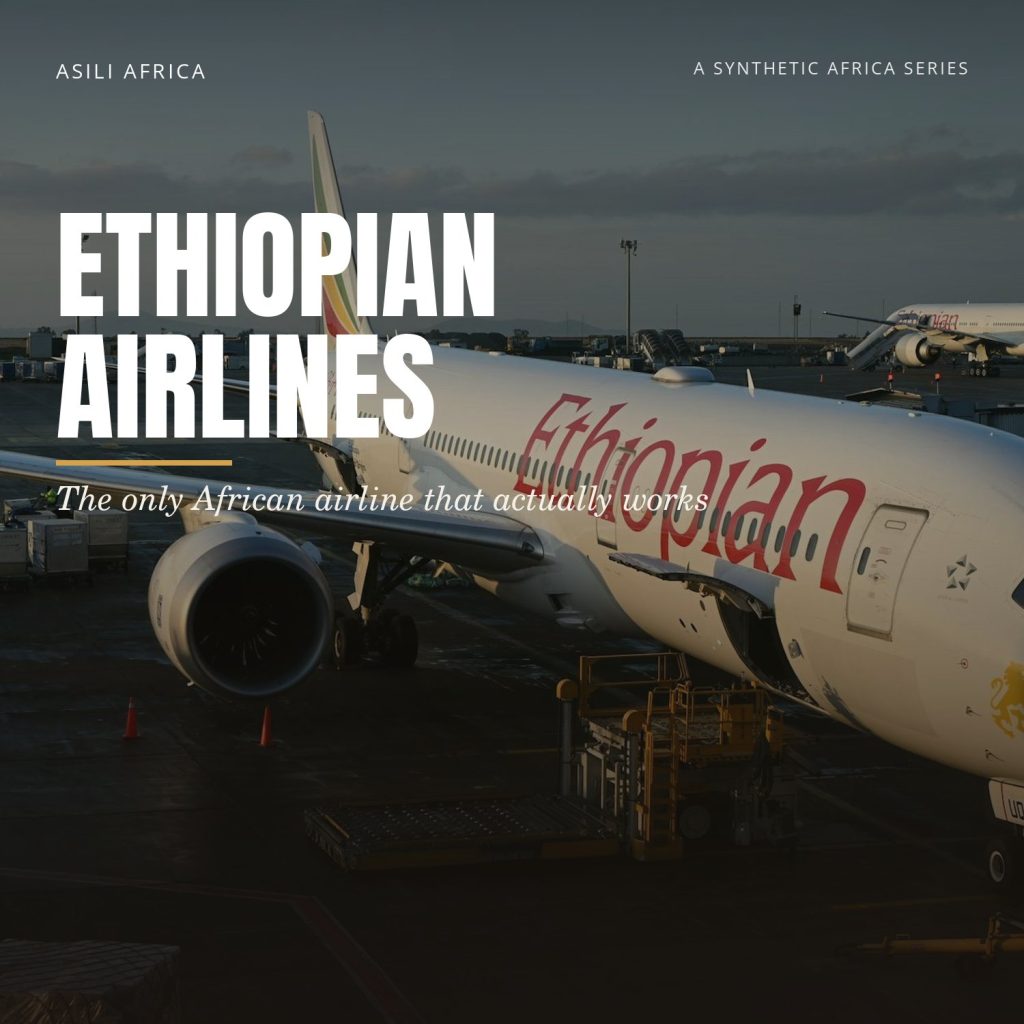
The Ethiopian Airlines Story: Who does this airline answer to?
Ethiopia is restructuring its debt. In twenty twenty four, the state’s guaranteed foreign debt stood at twenty eight point six billion dollars, and the lenders have been through the country’s accounts.
In the debt analysis the World Bank and the IMF prepare for Ethiopia, one state company’s borrowing is left out of the public total. It belongs to the national airline.
Ethiopian Airlines, the lenders write, is run on commercial terms. It enjoys managerial independence. It borrows without any government guarantees.
It publishes annual audited reports, they add, and it has a sizeable profit margin.
On the twenty ninth of July, twenty twenty six, the airline published its results for the year. Record revenue of nine point one billion dollars.
And for the first time in the record, no net profit figure at all.
Those two facts sit side by side. We are not going to guess how one bears on the other.
Eighty years in, the state owns this company outright, and that state’s own lenders count it as something apart. So who does this airline answer to?
THE CONTRACT AND THE COCKPIT
In nineteen forty five, Ethiopia had been free of Italian occupation for four years. Its only surface link to the sea was the railway to Djibouti, and the highlands made the roads slow.
In September of that year, John Spencer, an American adviser to Ethiopia’s foreign ministry, signed an agreement with the American carrier TWA to set up a commercial airline.
In December nineteen forty five, the airline was created by decree of Emperor Haile Selassie.
On the eighth of April, nineteen forty six, five war surplus Douglas transports flew its first service, from Addis Ababa to Asmara and on to Cairo.
Ethiopia owned the airline. The Americans ran it. Under the agreement, TWA chose the aircraft, hired the staff, managed the money, and appointed the general manager.
When the contract was renewed in nineteen fifty one, it set down an aim. The airline, it said, shall eventually be operated entirely by Ethiopian personnel.
Eventually. In May of that year, the first four Ethiopian pilot trainees began.
One of the Ethiopians who would fly for the airline was Alemayehu Abebe. He had trained at the air force school at Debre Zeit, the town now called Bishoftu, and in Sweden.
By his own account, he finished first in his class.
And by his own account, it did not get him into the cockpit. In a memoir published decades later, he wrote that the American management resisted the idea of allowing locals to fly, and relegated Ethiopians to support positions.
The reason management gave, as he recounted it, was the passengers. Passengers, they claimed, lacked confidence in black pilots and mechanics.
So the handover was two things at once. It was a clause in an American contract. And it was a fight against the managers who were running that contract.
The contract committed to it. The people carrying out the contract held it back.
In January nineteen fifty seven, at thirty two, Alemayehu Abebe took command of a commercial aircraft. He was the first Ethiopian captain.
In the late nineteen fifties, the airline’s routes reached north across the Mediterranean, to Athens and to Frankfurt.
By nineteen fifty nine, nineteen of the airline’s forty pilots were Ethiopian.
In nineteen sixty, it opened what one company history calls Africa’s first east west connection, to Khartoum, Lagos, Accra and Monrovia.
In nineteen sixty two and sixty three the jets arrived, and the first jet service flew from Addis Ababa to Nairobi.
In nineteen sixty five, the company took the name Ethiopian Airlines and moved to Bole.
In nineteen seventy, the contract was renewed for the fifth time, and TWA went from manager to adviser.
In nineteen seventy one, Semret Medhane became the airline’s first Ethiopian general manager. Years before, he had flown as Alemayehu Abebe’s co-pilot.
In nineteen seventy five, the airline’s thirty year relationship with TWA came to an end.
It had taken thirty years for Ethiopians to take their own airline back. They did it through the terms of a contract, and by fighting the people who managed it.
THE JUNTA AND THE ENGINEER
In nineteen seventy four, a military committee called the Derg overthrew Haile Selassie. The emperor who had decreed the airline died the following year.
The airline now belonged to a Marxist junta. Under the Derg, one company history records, the quality of service plummeted as staffing became bloated.
The TWA contract ran out in nineteen seventy five, a year into the revolution. From then on, no foreign manager stood between the airline and the state.
In nineteen eighty, the airline’s board persuaded the Derg to appoint a professional to run it.
A board is supposed to answer to its owner. This one went to its owner and argued, and the owner agreed.
The man was Captain Mohammed Ahmed, a veteran aviator and the airline’s former chief aeronautical engineer.
He cut the staff by more than a tenth.
He was also pressed to replace the airline’s American aircraft with Soviet types. He resisted.
The airline had bought Boeing seven two sevens in nineteen seventy nine. In nineteen eighty four, it bought seven six sevens.
It was the clearest act of independence in the airline’s history, a state company telling a Marxist government which planes it would not fly.
And it happened because the junta allowed it. The Derg could have refused the board. It could have overruled the engineer. It did neither.
That did not protect the airline from the economy around it. In the mid nineteen eighties, higher interest costs, bad exchange rates and a drought era slowdown wiped out the operating profits it had restored.
So the airline has not been profitable every single year. It has been profitable in most of them.
The profits came back. In the financial year ending in nineteen eighty nine, the airline made twenty four million dollars of net income on two hundred and forty million dollars of revenue.
Ten cents of profit on every dollar it took in.
In May nineteen ninety one, the rebel coalition known as the EPRDF was closing on Addis Ababa.
As the fighting approached the capital, the airline flew its planes out, temporarily, to Nairobi.
The Derg fell. The planes came home. Captain Mohammed Ahmed had run the airline for eleven years, to the end of the regime that appointed him.
And for that year, the airline posted a profit.
THE LETTER AND THE RETURN
The new government was the EPRDF, a coalition of former liberation fronts. Within two years, the airline’s leadership and the government were at odds.
In nineteen ninety three, Girma Wake left. He had joined the airline in nineteen sixty five, and he went after internal debates between the new government and the airline’s leadership.
In nineteen ninety four, forty executives, the airline’s top managers, among them the general manager, Captain Zelleke Demissie, signed a letter rebuking a government report.
All forty were fired.
In their place, the government appointed Ahmed Kellow, a finance academic from outside the aviation industry.
This was the same power that had let an engineer run the airline under the Derg, now used the other way. In nineteen eighty, a board had talked a junta round. In nineteen ninety four, a government removed the people who talked back.
In nineteen ninety seven, a veteran of the airline, Bisrat Nigatu, was named chief executive.
In nineteen ninety eight, the airline began flying to the United States. That same year, war with Eritrea began, and for two years it disrupted operations.
The airline’s losses in the late nineteen nineties were, in one company history’s word, minimal. Minimal losses are still losses.
In February two thousand and four, the government brought Girma Wake back, as chief executive. He was sixty years old.
The record gives no reason for his return. It shows only that a government he had left in a dispute put him in charge of its airline.
Under him, the fleet grew from twelve jets to thirty seven, and passengers from one point two million a year to three point two million, by the company’s own figures.
The company says he created fifteen hundred jobs, and that average employee incomes rose by a hundred and sixty seven percent.
In twenty eleven, Tewolde GebreMariam became chief executive. He had joined the airline in nineteen eighty five as a traffic officer.
He worked through cargo and regional posts in India, Saudi Arabia and North America, became head of sales and marketing in two thousand and four, and chief operating officer in two thousand and six.
A generation after Ethiopians had to fight their way into the cockpit, the airline was run by a man who had started near the bottom of it.
In December twenty eleven, the airline joined Star Alliance.
In August twenty twelve, it took delivery of the first Boeing seven eight seven in Africa.
Under Tewolde GebreMariam, revenue rose from about one billion dollars a year to about four and a half billion, before the pandemic.
The same government that had fired forty executives let the airline grow.
THE NATION’S AIRLINE
In June twenty eighteen, the government announced that it would open the airline to foreign investors. The state would keep a majority. Part of the nation’s airline was going to be offered for sale.
On the tenth of March, twenty nineteen, Flight three oh two left Bole at eight thirty eight in the morning, bound for Nairobi.
At eight forty three, it crashed. All one hundred and fifty seven people on board were killed.
They came from thirty five countries. Thirty two of them were Kenyan. Among them were United Nations staff on their way to a conference in Nairobi.
The captain, Yared Getachew, was twenty nine, the airline’s youngest captain, with more than eight thousand hours. The first officer, Ahmednur Mohammed, was twenty five, with three hundred and sixty one.
For the families, it was a catastrophe. It did not threaten the airline as a business. It parked its seven three seven MAX fleet, and returned the type to service in February twenty twenty two.
The cause lay in the aircraft. An automated flight control system on the Boeing seven three seven MAX, fed by one faulty sensor, activated again and again.
Under international rules, the country where a crash happens leads the investigation, so this one was run by Ethiopia’s civil aviation authority. Its final report, in December twenty twenty two, put the cause on that system.
Two foreign agencies disagreed on one point. America’s NTSB said appropriate crew management would have allowed the crew to recover the airplane. France’s BEA said crew resource management had degraded.
What, if anything, the airline changed in its own training afterwards, it has not said publicly.
The manufacturer’s part is on the record too. Boeing entered a two and a half billion dollar deferred prosecution agreement. The criminal case against it was dismissed in November twenty twenty five, at the request of the United States Justice Department.
In American civil courts, juries have awarded individual families more than twenty eight million dollars, and then, in May twenty twenty six, forty nine and a half million.
Nine Ethiopian passengers died, and eight crew. What their families received, and whether any of them went to court, is not in the public record.
Near where the plane came down, at Tulu Fara, eighteen of the families directed money from a Boeing community fund into two schools, a health centre and water points.
They serve more than fourteen thousand people. They opened in March twenty twenty four.
In January twenty twenty, as a new virus spread from China, African, European and American airlines suspended their flights there.
Ethiopian kept flying. Thirty five flights a week, to five Chinese cities.
Its chief executive, Tewolde GebreMariam, put the position plainly. “We should not isolate China,” he said. “We should not marginalize Chinese passengers.”
Under pressure, it cut February frequencies by about a third. At home, Ethiopians publicly criticised their government for keeping the flights going. The airline’s choice was being treated as the country’s choice.
Then the pandemic reached everywhere. The airline turned passenger jets into freighters.
It stayed profitable, with a profit for the year of roughly two hundred million dollars.
In April twenty twenty, it said it had not laid off any regular employee, while its contract and temporary workers were let go, and how many of them, and whether they were ever taken back, has not been made public.
In October twenty twenty, the sale was postponed. The airline stayed entirely the nation’s.
BADGES
In November twenty twenty, war began in Tigray, in Ethiopia’s north. By the middle of that month, according to The Telegraph, the airline’s Tigrayan staff were told by their superiors to hand in their badges.
Pilots, caterers, technicians and security guards were told not to return to work until further notice. The paper reported that staff at Africa’s largest airline were being ethnically profiled and excluded from work.
The government denied that it was targeting anyone by ethnicity.
Seven months earlier, the same airline had said that, through the pandemic, it had laid off no regular employee.
On the sixth of October, twenty twenty one, CNN published an investigation. It said cargo documents, manifests, eyewitness accounts and photographs pointed to weapons carried on the airline’s planes between Addis Ababa and Eritrea.
CNN reported that those flights went to Asmara and Massawa between the ninth and the twenty eighth of November, twenty twenty, in the first weeks of the war. It documented six occasions with military billing.
The airline denied it. To the best of its knowledge and its records, it said, it has not transported any war armament in any of its routes by any of its aircraft.
No one who worked those flights has spoken publicly, and no aviation body has examined the allegations.
American officials called the findings grave and warned of sanctions. The airline was never sanctioned.
In June twenty twenty one, flights to Mekelle, Tigray’s capital, stopped.
On the first of December, twenty twenty one, two of the airline’s own employees hid for about thirty six hours above the cabin ceiling of a seven seven seven flying to Washington.
American authorities held them on arrival, and fined the airline.
Three days later, two ground technicians, both twenty five, hid among flower crates on a cargo flight to Brussels. Belgium gave them asylum.
“We couldn’t live in Addis Ababa,” one of them told CNN. “We were being treated as terrorists.” He said four of his relatives had been killed, and his fiancée imprisoned.
CNN also reported that thirty eight Tigrayan security guards had been suspended at Bole, and that about sixteen technicians appeared to have fled, a number it could not verify. The airline did not respond to CNN.
How many Tigrayan employees lost their jobs, and whether any came back, the airline has never said, and no one has counted.
In November twenty twenty two, the federal government and Tigray’s leaders signed a peace agreement in Pretoria.
On the twenty eighth of December, twenty twenty two, flights to Mekelle resumed.
NOT THE STATE
At the end of twenty twenty one, ownership of the airline passed to a new sovereign wealth fund, Ethiopian Investment Holdings. The state still owned all of it.
In March twenty twenty two, Tewolde GebreMariam retired, citing his health. Mesfin Tasew became Group Chief Executive. He had joined the airline in nineteen eighty four as an associate engineer.
The World Bank and the IMF went on leaving the airline’s borrowing out of Ethiopia’s public debt. The authorities told them the airline does not intend to seek government support.
What the lenders publish is that debt as a share of the economy. There is no figure in dollars.
They also wrote a warning. The risks from Ethiopian Airlines, they said, appear negligible in the near term, but may rise considering investment intentions.
In July twenty twenty four, Ethiopia floated the birr. Over that year, it lost more than half its value against the dollar.
Mesfin Tasew called the impact on the airline small. Most of its revenue comes from international traffic, priced in dollars. What the float meant for staff paid in birr, no public source has examined.
The investment the lenders point to is a new airport at Bishoftu. In January twenty twenty six, ground was broken for what is set to be Africa’s biggest airport, costed at twelve and a half billion dollars for its first phase.
The airline is putting up about three point seven five billion. The other eight point seven five billion dollars must come from outside lenders.
The African Development Bank is leading the effort to raise it, with five hundred million dollars of its own pledged, subject to approval. The gap has not been closed. It is a bet, and it is still being placed.
About fifteen thousand people have been displaced for it. Mesfin Tasew says farmers have already moved into their new houses.
Some residents told Addis Standard they had been displaced without compensation or replacement housing. The city administration denied it.
How the people who were moved are living now, no one has independently followed up.
On the twenty eighth of February, twenty twenty six, the United States and Israel struck Iran, and war spread across the Gulf. Ethiopian suspended flights across the Middle East.
The Strait of Hormuz closed. The airline’s main supply of jet fuel came from Kuwait, and it was cut off. In Addis Ababa, jet fuel ran short.
Over the financial year to June, revenue rose twenty percent. Costs rose twenty five percent.
On the twenty ninth of July, the airline reported nine point one billion dollars of revenue, its highest ever, and twenty point seven million passengers.
It did not report its net profit. It did not report a second measure of its operating profit either.
Mesfin Tasew gave his reason. Releasing standalone profit numbers without the full global context, he said, can distort market perceptions among investors and international partners.
He also said that if high energy prices persisted through the new year, they would place a heavy squeeze on profit margins. What the airline actually earned in the year is not public.
Among the lenders’ reasons for treating the airline as separate from the state are audited annual reports and a sizeable profit margin. This year, the profit was not published.
In August twenty twenty six, Tewolde GebreMariam became chief executive of Air India.
In February twenty twenty six, Girma Wake, who had left the airline in nineteen ninety three and come back in two thousand and four, was made acting chief executive of Uganda Airlines.
The airline whose first Ethiopian captain had been kept out of the cockpit now produces the people other airlines send for to run them.
Mesfin Tasew reached Ethiopia’s civil service retirement age of sixty around twenty twenty three. His tenure has been extended three times at the request of the government, the third time to August twenty twenty seven.
Asked about leaving, he said, “I am not certain whether I will leave or continue. That decision is up to the government.”
What the criteria are, and whether the board, the holding company or the Prime Minister’s office makes the call, is not public. The succession is contested.
For eighty years, a company owned by the Ethiopian state has been run more like a business than the state that owns it, as far as each government would allow.
This year it reported its biggest revenue ever and did not say what it earned. It is moving earth for Africa’s biggest airport, with most of the money still to find.
And its chief executive cannot retire until the government lets him. The question is not whether Ethiopian Airlines works. It is who it works for, and who decides. This is Asili Africa. Every empire has an origin. See you on the next one.
Key Takeaways
- THE CONTRACT AND THE COCKPIT. In nineteen forty five, Ethiopia had been free of Italian occupation for four years.
- THE LETTER AND THE RETURN. The new government was the EPRDF, a coalition of former liberation fronts.
- THE NATION’S AIRLINE. In June twenty eighteen, the government announced that it would open the airline to foreign investors.
- NOT THE STATE. At the end of twenty twenty one, ownership of the airline passed to a new sovereign wealth fund, Ethiopian Investment Holdings.
Also available on YouTube — search “Asili Africa” or subscribe to our channel.