
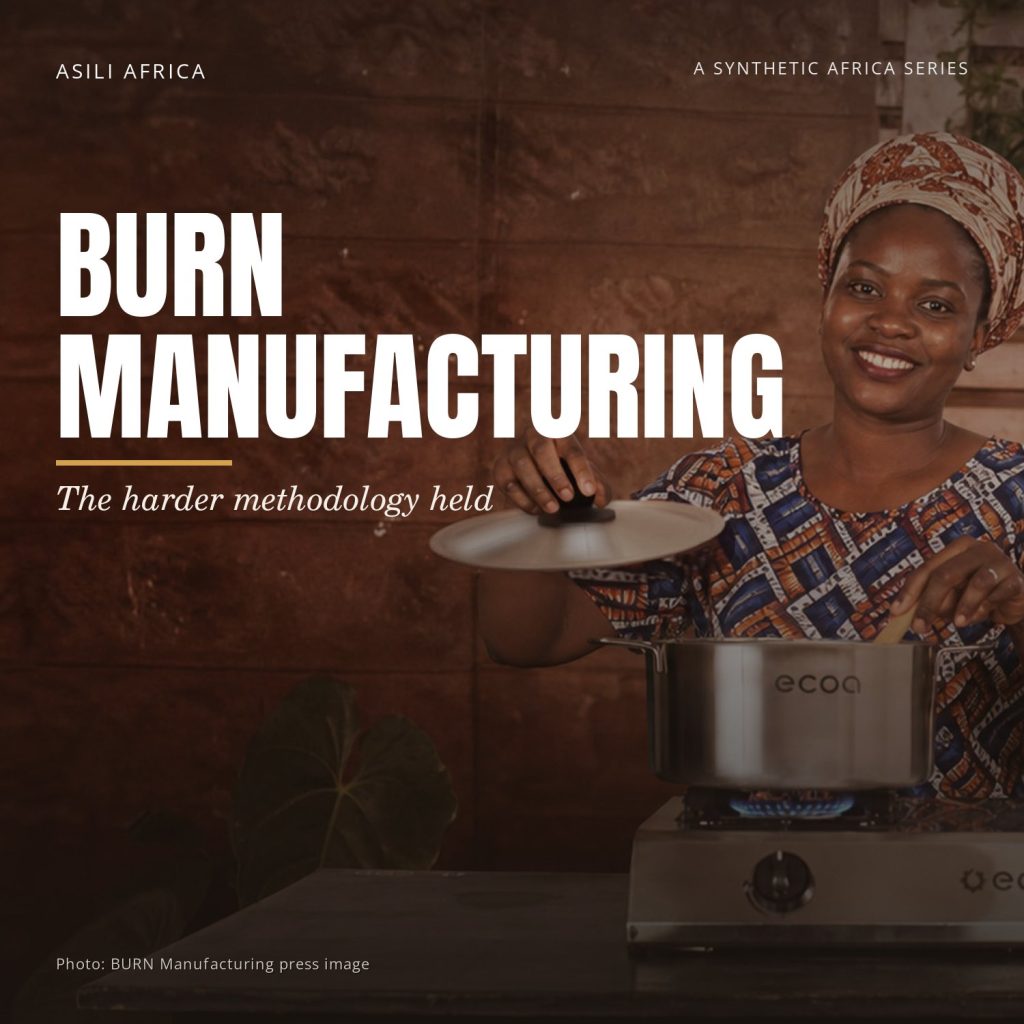
The BURN Manufacturing Story: A cookstove company that’s sold 3 million units and saved 20 million tons of CO2
In the final week of October 2024, federal prosecutors in lower Manhattan unsealed an indictment against Kenneth Newcombe, the former chief executive of C-Quest Capital, accusing him of orchestrating one of the largest carbon-credit frauds in modern history. The charges alleged that across Africa and Asia, his company had been fabricating data on cookstoves that, in reality, were never installed, never used, or never delivered the emissions cuts they had been paid for.
Five million carbon credits were cancelled.
Nine months earlier, researchers at the University of California Berkeley had published a study concluding that the cookstove carbon-credit sector as a whole had been over-issuing credits by a factor of nearly ten. Five months later, the Integrity Council for the Voluntary Carbon Market — the body that oversees credit quality globally — would rule that the methodologies underpinning sixty-four percent of all cookstove offsets on the market were “insufficiently rigorous” to carry its top seal.
In the space of fifteen months, the clean-cooking carbon market — a market that had quietly become one of the largest single funders of household energy transition across the Global South — was being publicly dismantled.
And then, on November 25, 2025, in a quiet announcement from Gold Standard’s office in Geneva, one company became among the very first in the world to issue cookstove credits bearing the new top-tier integrity seal. The seal the rest of the sector had failed.
That company was a Kenyan cookstove maker named BURN Manufacturing. And the entire issuance had already been pre-sold.
This is the story of how a Canadian-American forester walked into a Congolese forest in 1990, watched it burn for charcoal, and spent thirty-five years building Africa’s largest cookstove company on the bet that he could prove what every other developer in the sector eventually could not.
The Forester
The story of BURN Manufacturing does not begin in Kenya. It begins in a forest in the Democratic Republic of Congo, in 1990.
A young Canadian-American forester named Peter Scott was travelling through the country at the time, doing the kind of fieldwork that forestry specialists do — walking through stands of timber, talking to communities, observing what was being cut and why. What he kept seeing, around every major town in the eastern DRC, were the same scenes. Smoke. Stacks of sacks by the roadside. The slow, methodical conversion of standing forest into charcoal for the urban cooking market.
The scale of it was the part that stayed with him. Across Sub-Saharan Africa, an estimated nine in ten households were cooking on wood or charcoal. The fuel was being made, almost without exception, by stripping forests. And the stoves the fuel was being burned in were astonishingly inefficient — open three-stone fires, or thin metal jikos hammered together in informal workshops, that wasted most of the heat of the combustion and forced the cook to consume more wood, more charcoal, and more smoke than any reasonable design ever needed to.
Peter Scott walked out of that forest having decided what he was going to do with the rest of his career. He was going to build a better cookstove.
What followed was thirteen years of apprenticeship. In 1997, he joined the Aprovecho Research Center in rural Oregon — a small, deeply technical outfit that had been quietly perfecting combustion-chamber designs since the seventies. From there he became, for most of the next decade, an itinerant cookstove consultant. He worked in Southern Africa. He worked in Central America. He worked in East Africa. He installed institutional stoves in schools and prisons. He trained local fabricators. He published. He iterated.
The recognition followed the work. In 2006, he won the Ashden Award — one of the most respected prizes in global energy access — for institutional stove programmes in Southern Africa. In 2010, Foreign Policy magazine named him in its annual list of the world’s hundred most influential thinkers.
By that point, Scott had concluded something contrarian about his own sector.
The cookstove industry, as it had operated for decades, was structured as charity. Designs were developed in Western universities and research labs. Stoves were manufactured offshore, or in small artisanal workshops, and then shipped or handed out for free, often by donor-funded programmes that ran for a few years and then ended. The model treated cookstoves as humanitarian aid. Which meant that nobody, anywhere, was building cookstoves at industrial scale, to commercial quality, sold through retail channels, as products that customers chose to buy.
Scott’s view, by 2010, was that this was the reason the global cookstove problem was not getting solved. You could not give your way out of three billion kitchens. You had to build a company.
In 2010, on Vashon Island in Washington State — a quiet ferry community just off Seattle — Scott incorporated two linked entities. The first was Burn Design Lab, a US-based non-profit, that would handle research, engineering, and intellectual property. The second was BURN Manufacturing Company, a for-profit, that would commercialise the designs at scale. Two organisations. One mission. A contrarian, hybrid structure designed to do what neither pure charity nor pure venture capital had managed to do for the African cooking market in fifty years of trying.
The team was small. The budget was, in Scott’s own later description, a shoestring.
They spent three years prototyping and testing. They built relationships with potential manufacturing partners. They mapped distribution. They studied — in granular detail — the unit economics of charcoal cooking in the East African urban market, where the stove that BURN intended to displace cost about three dollars, and where the household income margin available to buy anything better was thin.
And then, in 2014, they made the call that would define everything.
They were not going to manufacture in China and ship to Africa.
They were going to manufacture in Kenya. On the outskirts of Nairobi. In a brand-new, purpose-built, vertically integrated factory. Every component, from pins to sheet metal, made on site. The first plant of its kind in Sub-Saharan Africa.
Twenty-four years after Peter Scott walked out of a forest in the DRC, the first Jikokoa rolled off a Kenyan assembly line.
Selling a Thirty-Dollar Stove
The first three years inside the Kenyan factory were a slow, patient grind against a piece of consumer arithmetic that nearly killed the company.
The Jikokoa, BURN’s flagship charcoal cookstove, was a beautifully engineered piece of equipment. Insulated combustion chamber. Sheet-steel body that would last a decade. Sixty-four percent less charcoal consumption than the traditional jiko it was designed to displace. Independent testing confirmed the numbers. Over a year of normal household use, a Jikokoa-owning family would save more, in unpurchased charcoal, than the stove had cost them.
On paper, this was an extraordinary deal.
In a Nairobi market in 2014, it was not.
The traditional metal jiko that almost every charcoal-cooking household in East Africa already owned cost about three US dollars, on a good day, from a hardware vendor on River Road. The Jikokoa cost about thirty. That is a ten-times multiple on a household appliance, asked of customers most of whose disposable cash was being spent week to week — on school fees, on transport, on the very charcoal the new stove was supposed to save them from buying.
The fact that the maths worked over twelve months was, for many households, irrelevant. They did not have the thirty dollars today.
BURN tried every distribution route the Kenyan market offered.
Supermarket retail was the first push. Stoves were placed in Nakumatt, in Tuskys, in Naivas. The unit margins, after retail markup, were thin. Foot traffic conversion was thinner. A shopper in a supermarket aisle in 2015 was not, by and large, in the market for a thirty-dollar replacement of a three-dollar item, no matter what the calculator on the back of the box said.
Microfinance was the second push. BURN partnered with Equity Bank to offer six-month consumer loans for the Jikokoa, structured so that the monthly repayment was roughly equal to the monthly charcoal saving. The pitch was elegant: the stove pays for itself out of money the household was already burning, literally. Sales picked up. They did not explode.
Pay-as-you-go was the third. M-Kopa, the Kenyan asset-financing pioneer, integrated the Jikokoa into its mobile-payment infrastructure. Households could put down a small deposit, take the stove home, and pay daily by mobile money — locking out the device if they fell behind. The technology was elegant. The customer-acquisition cost, in a low-density informal market, was still painful.
Through all of it, BURN was carrying the cost of running a modern industrial factory in Kenya. Two shifts. A growing payroll. Imported steel. The line had to be fed. The stoves had to be sold. Cash flow was, in the polite language of impact investing, challenging.
Two things kept the company alive through that period.
The first was patient capital. The American impact investor Acumen, which had been studying the cookstove sector since 2015, took an early equity position — part of a six-million-dollar pool that the fund eventually deployed across five cookstove companies globally. Talanton, Spark+ Africa Fund, and a small group of mission-aligned debt providers followed. BURN was, by 2017, profitable on paper for the first time. The margins were small. The runway was real.
The second was external validation that the design was the right design. In 2015, Ashden returned, this time recognising BURN specifically — a different award, in a different category, for the company’s impact on women’s health and economic opportunity through cleaner indoor cooking. The 2015 citation noted something else worth pausing on. Of BURN’s growing factory workforce, roughly half were women. They were not just on the assembly line — they were running production lines and operating heavy machinery. In an East African manufacturing sector where female participation on the factory floor remained in single digits, this was, and remains, unusual.
By the end of 2017, BURN had distributed, by some estimates, around two hundred and fifty thousand stoves cumulatively. That was a real number. It was also, set against the company’s mission — to displace the cooking infrastructure of a continent — a deeply insufficient one.
Two hundred and fifty thousand stoves a year was the wall.
What broke the wall was not a new stove. It was a piece of financial infrastructure that, until then, BURN had treated as a side hustle.
Charcoal Is the New Carbon
The pivot that turned BURN from a respected, mid-sized cookstove company into the largest in Sub-Saharan Africa did not involve a new product.
It involved a methodology document.
Carbon credits, for those who have not had occasion to wade into the voluntary carbon market, work in a specific way. A project that demonstrably reduces emissions — by replacing a dirty technology with a cleaner one, in a measurable, audited fashion — can generate carbon credits equivalent to the tonnes of carbon dioxide it has kept out of the atmosphere. Those credits are sold, primarily to corporate buyers, to offset their own emissions. The proceeds fund the project. The cleaner technology gets cheaper. More households adopt it. More credits get issued. The flywheel, in principle, spins.
Cookstoves are a textbook candidate. A family in Nairobi that switches from a traditional jiko to a Jikokoa cuts its charcoal consumption by roughly two-thirds. Multiplied by the weight of carbon embedded in that unburnt charcoal — which, in turn, comes mostly from a forest that did not need to be cut — the avoided emissions per stove per year are real, measurable, and significant. Aggregate that across hundreds of thousands of households, and the project becomes one of the most cost-effective decarbonisation interventions in the world.
BURN had been generating some carbon credits since the early days. What changed in the second half of the 2010s was rigour.
The Gold Standard — the world’s most respected voluntary carbon standard, founded by WWF and a coalition of NGOs — had been developing methodologies specifically for clean cooking. The most rigorous of these was called Metered & Measured Energy Cooking Devices. It required that participating stoves carry sensors. That actual usage, in actual households, be measured and verified — not estimated from surveys, not extrapolated from sales data, not assumed. The methodology was painful. It was expensive. It generated fewer credits per stove than the looser methodologies that competing developers were using. And it produced credits that anyone in the market — buyer, regulator, journalist — could defend.
BURN built its carbon programme around the harder methodology.
The economic consequence was immediate and transformative.
A Jikokoa, viewed purely as a household appliance, cost about thirty US dollars to manufacture and distribute. A Jikokoa, viewed as a carbon-credit generation unit, produced tradeable credits worth more, over its useful life, than the stove itself cost to make.
Which meant BURN could do something extraordinary. It could subsidise the retail price of the stove — out of the carbon credits that the stove itself would eventually generate — and recover the cost on the back end, over years, as the credits matured.
In 2021, the company cut the Jikokoa Classic’s retail price by twelve hundred Kenyan shillings — roughly ten US dollars on a stove that had previously sold for about thirty-seven. The Jikokoa was no longer a thirty-dollar product. It was a twenty-five-dollar product. In subsequent promotions, with deeper carbon subsidy, prices on some lines fell as low as ten dollars.
The sales graph bent.
Molly Brown, who joined BURN as Head of Carbon Strategy in this period and who has since become one of the most visible voices in the global cookstove-credit market, has described the shift in a single, clean sentence. Before the carbon programme scaled, BURN was selling roughly two hundred and fifty thousand stoves a year. Once it did, BURN was selling roughly two hundred and fifty thousand stoves a month.
Twelve times the velocity. From the same factory.
In 2022, Key Carbon — a London-based carbon-finance specialist backed by Cartesian Capital — announced a strategic partnership with BURN, anchored by a twenty-five-million-dollar carbon-credit-backed financing facility. It was the first major institutional capital deployed specifically against the carbon side of the business.
The same year, BURN reported revenue of around twenty-five-point-three million euros — roughly twenty-eight million US dollars. The company was now, by stove volumes, the largest clean-cookstove manufacturer in Sub-Saharan Africa.
Charcoal had become a carbon asset.
And BURN, almost without anyone noticing, had become a carbon company that happened to make stoves.
Stacking the Capital
Between 2022 and 2025, BURN raised, in tranche after tranche, the kind of capital stack that almost no African industrial-scale climate-tech company had ever assembled before.
The pattern was specific. Most of the money was not equity. Most of it was a blend — debt, concessional finance, carbon-credit-backed facilities, and development-bank guarantees — anchored to clearly defined geographic and product expansions. It was capital structured the way infrastructure projects are structured, not the way venture-backed software companies are.
In April 2024, twelve million dollars from Key Carbon and Cartesian, specifically to expand distribution.
In October 2024, fifteen million dollars from the European Investment Bank, specifically to scale electric cooking.
In May 2025, five million dollars from Cygnum Capital’s Africa Go Green Fund, specifically to push distribution into Mozambique, Nigeria, and the Democratic Republic of Congo.
In June 2025, eighty million dollars from TDB Group, anchored by ASCENT — the World Bank-backed initiative to deliver clean energy access to three hundred million Africans by 2030 — specifically to subsidise the rollout of around four hundred and twenty-nine thousand stoves across Zambia, the DRC, and Mozambique. The largest single financing in the company’s history.
In July 2025, the African Development Bank added a further tranche, specifically aimed at expanding the electric-cooking line into East and Southern Africa.
By the end of 2025, BURN had distributed approximately four-point-four million stoves cumulatively, across as many as thirteen African countries, depending on which counting convention you used. It had abated, by Gold Standard’s verified accounting, around twenty million tonnes of carbon dioxide. It had saved an estimated sixteen million tonnes of wood. It had generated nine-point-five million Gold Standard credits. It had reached, by its own reporting, around twenty-four million end users — roughly one in every fifty Sub-Saharan Africans.
The factory itself, in Ruiru, was now running at a stated capacity of four hundred thousand stoves per month — roughly four-point-eight million units per year — and the company had publicly committed to a build-out path that would take it to twelve million units annually by the second half of the decade.
The workforce had crossed two thousand five hundred employees. Roughly half were women.
The product line had expanded out of the charcoal core into a full energy-ladder portfolio, rebranded under a new family name: ECOA Char, ECOA Wood, ECOA LPG, ECOA Electric, ECOA Induction. The flagship Jikokoa now sat alongside an electric pressure cooker that had won the 2020 Global LEAP Affordability Prize, and a metered induction cooker designed to support pay-as-you-cook tariffs anchored, in turn, by carbon credits. The flywheel was no longer just charcoal-to-credit. It was a multi-fuel, multi-product, vertically integrated, carbon-financed African appliance maker.
In 2025, Ashden returned for a third time. This time, BURN received the Outstanding Achievement Award for the Global South — recognition of the company’s role over a decade of work.
The numbers, by mid-2025, were the kind of numbers that would, in any other sector, have produced a wave of glossy magazine covers and a quiet conversation about an IPO.
What was happening in the wider carbon market that year would, instead, force BURN into the most consequential test of its short corporate life.
The reckoning was already in motion.
The Test
By the start of 2026, BURN occupied an unusual position in its own industry.
The sector around it was, in the technical language of voluntary markets, in the middle of a credibility crisis. The Berkeley overcrediting study had concluded that across the cookstove industry as a whole, credits were being over-issued by roughly nine times. The C-Quest Capital fraud case had stained the entire category. The Integrity Council for the Voluntary Carbon Market had ruled that the methodologies underpinning sixty-four percent of all cookstove credits on the market at end-2024 could not carry the new Core Carbon Principles seal.
The market for cookstove credits, in the second half of 2025, was the most contested it had ever been.
The methodology BURN had built its carbon programme around — Gold Standard’s Metered & Measured Energy Cooking Devices — was the one methodology the Berkeley researchers had found to be most aligned with their own conservative estimates. It was the one methodology the Integrity Council ultimately approved as eligible to carry the CCP seal. And on November 25, 2025, the joint venture between BURN and Key Carbon — formally trading as Global Cookstoves — became one of the very first developers in the world to issue cookstove credits carrying the new label, against two Gold Standard projects in Kenya identified in the registry as GS12350 and GS12285. The entire issuance was pre-sold via the carbon marketplace Patch before the registration ink was dry.
The integrity bet, the bet Peter Scott’s team had quietly made years earlier when they had chosen the harder methodology, had been validated by the rest of the market collapsing around them.
The story is not finished, and there are real questions still open.
The Jikokoa, even at carbon-subsidised prices, remains expensive for the bottom quartile of Kenyan households. Replicating the supermarket-plus-microfinance-plus-carbon-subsidy distribution stack in Zambia, the DRC, and Mozambique — countries that do not have Kenya’s mobile-money or retail infrastructure — is a genuinely hard piece of execution, and the ASCENT-funded rollout is the first real test of whether the model travels. The stated production-capacity build to twelve million units a year sits above cumulative ten-year sales of around four-point-four million, which implies that demand has to step up sharply or capacity will sit idle. And BURN’s reliance on a single approved methodology, while protective today, is concentration risk if Gold Standard or the Integrity Council tighten the rules further.
But the company that walked into the carbon-credibility storm of 2024 and 2025 walked out of it bigger, more credible, and more central to the sector than it had been when the storm began. That is a rare thing.
What BURN demonstrated, in the end, is something the African industrial story has not had many chances to say out loud. That it is possible to build a continental-scale, industrial-quality, vertically integrated manufacturing business on African soil, with a half-female workforce on the factory floor, funded by a stack of global climate capital, around a product designed to solve a problem that Western donors had been failing to solve with charity for fifty years.
The forester who walked out of a Congolese forest in 1990 with an idea in his notebook now runs a factory in Ruiru that ships stoves to thirteen African countries and credits to half the buyers in the voluntary market.
The bet is not finished. But it is, so far, working.
Every empire has an origin.
BURN’s was a forester walking through a Congolese forest in 1990, watching it burn for charcoal, and refusing to walk away. A factory built where no factory like it had ever stood. A methodology chosen because it was harder, and turning out, in the end, to be the one that held.
Four million kitchens. Twenty million tonnes of carbon. One Kenyan factory.
This is Asili Africa.
Key Takeaways
- The Forester. The story of BURN Manufacturing does not begin in Kenya.
- Charcoal Is the New Carbon. The pivot that turned BURN from a respected, mid-sized cookstove company into the largest in Sub-Saharan Africa did not involve a new product.
- Stacking the Capital. Between 2022 and 2025, BURN raised, in tranche after tranche, the kind of capital stack that almost no African industrial-scale climate-tech company had ever assembled before.
- The Test. By the start of 2026, BURN occupied an unusual position in its own industry.
Also available on YouTube — search “Asili Africa” or subscribe to our channel.