
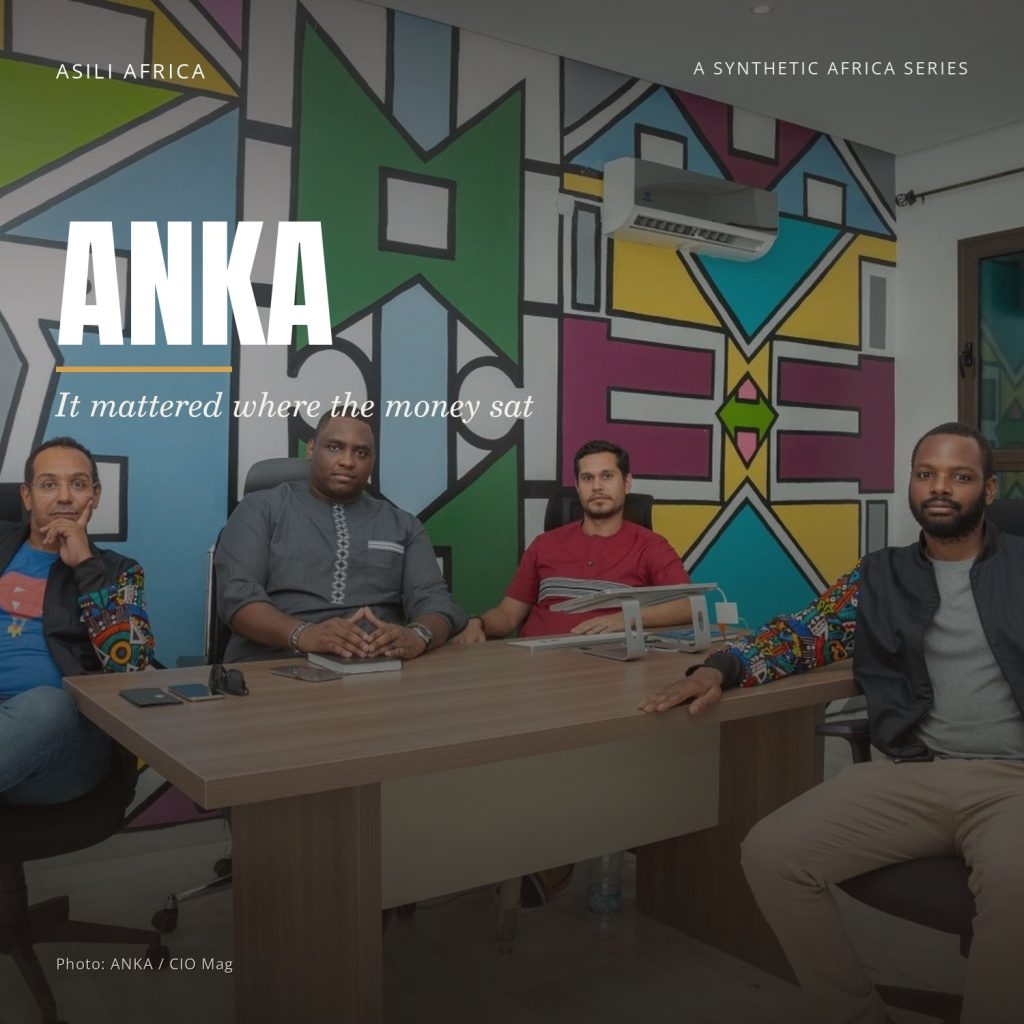
The Anka Story
In the middle of twenty twenty four, in Abidjan, a small e-commerce company most of the African tech industry had barely heard of quietly did something almost none of its more famous peers had done. It closed the year at four point one million United States dollars in revenue. And at that revenue, it hit operational breakeven. In a decade dominated by African consumer platforms burning through hundreds of millions of dollars in venture capital and never once turning a profit, this one francophone marketplace, run out of Côte d’Ivoire, had figured out how to make the numbers add up.
Eight months later, on the seventh of May, twenty twenty five, a French holding company called Mansaart, registered in Paris, walked into a Paris commercial court and filed a formal declaration that it could no longer pay its bills. Mansaart was the parent company of that Abidjan operator. The Abidjan operator was profitable. The Paris parent was not. Eighty days later, the same court declared Mansaart legally dead, and put its assets, including its Ivorian subsidiary, on the block. Three months after that, a newly formed New York fashion company almost nobody had heard of walked in and bought the whole thing in a distress sale for a price nobody would disclose. But that everyone in the room knew was well below what the investors had put in.
This is the story of Anka. The company that proved a hard business, and could not survive its own cap table.
ACT 1 — THE ORIGIN
The story of Anka does not begin in Abidjan. And it does not begin in Paris. It begins in Bamako, Mali, in nineteen eighty eight. The year Moulaye Tabouré was born. Moulaye grows up in Bamako, sits his baccalauréat, and does what many bright young Malians of his generation with the option to leave will do. He leaves. He goes to Paris. He studies at Paris Dauphine, and he finishes with a Master’s degree in audit and consulting in extended enterprise information systems. Which is a long name for what he actually becomes. A corporate internal auditor.
For roughly a decade, Moulaye is not building a company. He is inside them. He starts at Orange in Mali in two thousand and eight. He moves to IBM. Then SFR. Then PwC, the accounting firm, where he does information technology audit. And finally to the Alstom Group, the French rail engineering firm, where, by the time he is in his mid twenties, he is Internal Audit Team Leader. On paper, he is a French corporate finance careerist. He is not, on paper, an African tech founder.
But somewhere in the middle of that corporate audit decade, roughly between twenty thirteen and twenty fifteen, Moulaye does something that will explain almost everything that follows. He takes out a loan. He flies home to Bamako. He walks into an auto market. And he buys a Sotrama. The Sotrama is the green and yellow shared minibus that is Bamako’s default public transport. He puts his former chauffeur behind the wheel. And he tries, from Paris, to run a passive income minibus business on the other side of the Sahara.
The Sotrama does not go well. Over almost two years, Moulaye learns, painfully, everything his corporate audit career had not taught him. Drivers. Maintenance. Breakdowns. Revenue leakage. Discipline. Cash management. Fieldwork. The Sotrama teaches him that in West Africa, the operator’s problem is not demand. The problem is operational trust. Years later, when he is asked to explain the through line of his career, he will say the issue has always been the same. How to build more reliable, more professional, more inclusive, and more useful services.
In twenty sixteen, in Abidjan, Moulaye stops running the Sotrama, leaves the corporate audit career behind, and, with two co-founders, incorporates a new company. Abdoul Kadry Diallo, of Guinean heritage, becomes the operations lead. He will become Chief Operating Officer. Luc Perussault Diallo takes the product and technology side. Moulaye becomes Chief Executive. They call the company Afrikrea. And the thesis is one line long.
African artisans, tailors, jewellery makers, and small designers are already producing beautiful, saleable products. And the buyers already exist. Mostly in the African diaspora in Paris and New York. Plus a growing cohort of non diaspora buyers curious about African fashion. What does not exist is the plumbing between the two. Etsy does not ship well out of Bamako. eBay will not settle a payment to a Kenyan bank. Instagram will drive the discovery, but Instagram will not fulfil the order. Afrikrea launches, in twenty sixteen, as the plumbing. A marketplace where African makers open a free storefront, and Afrikrea takes a small commission on every sale.
The choice of Abidjan is a logistics choice. Not Bamako, where Moulaye was born. Not Lagos, where every other African tech founder was raising. Not Nairobi. Abidjan has the port. Abidjan has the DHL hub. Abidjan has flight connectivity to Paris. And Abidjan sits in the CFA franc zone, which shares a currency and a language across most of francophone West Africa. Moulaye’s own framing, later, would be that francophone Africa is harder to build in than anglophone Africa, because the ecosystem is thinner. And that the extra difficulty produces more resilient companies. It was, in twenty sixteen, a market almost no African tech investors were looking at. That was the whole point.
ACT 2 — THE STRUGGLE
For the first four years, Afrikrea does the unglamorous work of stitching together a two sided marketplace in a market where neither side had a working platform to graduate from. Sellers come slowly. Buyers come slowly. But they come. By twenty nineteen, three years in, Afrikrea reports more than five thousand designers on the platform, and roughly five million United States dollars in cumulative sales, into buyers in one hundred and one countries. It is still, at that stage, a small company. But it is a real one.
In February twenty twenty, Afrikrea closes its first institutional cheque. One million United States dollars in seed capital, led by a francophone Africa fund based in Paris, called Saviu Ventures, with participation from a small French angel fund called Id Four Ventures. It is the smallest possible round that lets the company breathe. And then, thirty days later, the world stops.
The pandemic, which will crush most of the global consumer economy, does something specific and counterintuitive to Afrikrea. It accelerates it. Because when physical retail closes, the African seller who used to sell into a Lomé market or a Nairobi weekend fair has nowhere to go. And the Parisian buyer, sitting at home with a laptop and no restaurants to spend at, has time to browse. Afrikrea reports two hundred and fifty percent year on year growth through the pandemic period. But growth of that shape exposes a very specific problem.
The seller can list the dress. The buyer can pay for it. Neither of them can, on their own, close the transaction. In the CFA franc zone, and in Nigeria, and in Kenya, and in much of the continent, moving foreign currency card revenue into a local mobile money wallet is a multi week paperwork exercise. Central banks want their forms. Compliance officers want their proofs. And DHL Express’s published tariffs from Bamako to Paris, for a single one off parcel, are punitive. A sixty United States dollar handbag cannot ship for twenty United States dollars in freight and remain a business.
Moulaye and his co-founders sit inside their office in mid twenty twenty and stare at three problems written on a whiteboard. Forex. Logistics. Trust. The forex problem, they conclude, needs a European settlement layer, where the buyer’s euros or dollars land inside the eurozone, and the platform disburses to the seller as a service, rather than the seller trying, herself, to import the foreign currency. The logistics problem needs a wholesale DHL contract, where the platform aggregates thousands of parcels a month into a single commercial rate, and resells that rate back to the seller. And the trust problem needs an escrow arrangement, where the buyer’s money is held until DHL confirms delivery. None of these three problems is glamorous. All three have to be solved together. Because the day you solve two of the three, the sale still does not close.
The pivot Moulaye starts articulating, publicly, in late twenty twenty and into twenty twenty one, is a repudiation of the entire prevailing model of African e-commerce. Companies like Jumia, Konga, Kilimall, and Copia, in the same period, had raised hundreds of millions of dollars trying to persuade African consumers to buy imported goods on credit they could not sustain. Moulaye’s argument was that Africa was not, structurally, a buyer market. It was a seller market. And the trick was not to force African consumers to spend money they did not have. It was to help African sellers move product to consumers who did have money. Abroad. Export. Not import. That single sentence, he would tell Semafor two years later, was the whole thesis of the business.
ACT 3 — THE PIVOT
On the twenty eighth of April, twenty twenty one, Afrikrea announced the thing it had spent two years building underneath the marketplace. A new operating layer, launched under a new brand called Anka. Anka would sit on top of two specific partnerships. One with DHL Express, which had agreed to give Afrikrea an aggregate wholesale shipping contract, so that a leatherworker in Bamako paying to ship a single parcel to Paris would pay a rate closer to a small Parisian business than a walk in DHL retail customer. And one with Visa, which would let the same seller accept a Paris card payment, or a New York card payment, or a London card payment, into a euro denominated settlement account held at the French parent company. Both partnerships took roughly two years to negotiate. Both were unusual. And together, they were the entire economic unlock.
Anka the software product was, on the front end, a Shopify for Africa. A dashboard where a Nigerian jeweller or an Ivorian shoemaker could build a storefront, list products across the Anka marketplace and her own website and her Instagram at the same time, and manage every order from a single inbox. On the back end, it was a Stripe plus DHL for Africa. The seller printed a DHL waybill from the dashboard. The buyer paid a Visa card into the Paris settlement account. Anka took a small spread on the payment, a small margin on the shipping, and a subscription fee for the software itself. The freemium ladder started at zero. It rose to roughly ten euros a month for full commerce features.
Eight months after the operating layer launched, on the eleventh of January, twenty twenty two, Anka closed a six point two million United States dollar pre Series A round. It was, at that point, the largest single cheque a francophone West African consumer company had raised in years. The round was led by Investisseurs et Partenaires, a francophone Africa fund based in Paris. And the new investor list was unusual. The Bestseller Foundation, the philanthropic arm of the Danish fashion group behind Vero Moda and Jack and Jones. A Japanese cross border fashion operator called Enigmo. A Chicago fund called VestedWorld. A Lagos angel network called Rising Tide Africa. And, notably, one personal cheque from a specific individual. Joe Tsai. The co-founder of Alibaba. The owner of the Brooklyn Nets. Widely reported to have invested in Anka personally, through his family office network. It was not a large cheque on the scale of his balance sheet. But its presence on the cap table sent a signal.
On the same day the round closed, the company formally rebranded. Afrikrea, the marketplace, was folded into Anka, the operating brand. At the time of the round, Anka reported seven thousand sellers on the platform, buyers from one hundred and seventy countries, and roughly thirty five million United States dollars in cumulative marketplace transactions since inception. Total capital raised to date, across seed and pre Series A, was eight point one million United States dollars. Which, on any comparable metric to Jumia, Konga, or the rest of the African Amazon field, was a rounding error. Anka’s competitors had raised twenty times as much and were still, structurally, losing money on every transaction.
ACT 4 — THE SCALE
On the nineteenth of September, twenty twenty three, twenty months after the pre Series A, Anka announced a five million United States dollar pre Series A extension. And the lead investor changed the whole picture. The International Finance Corporation, the private sector arm of the World Bank, led with a three point four million dollar equity cheque. Alongside them came Proparco, the French development finance institution, and Bpifrance, the French public investment bank. The round was a mix of equity and debt. And for the International Finance Corporation, the equity cheque had a specific significance. It was their first ever investment, on record, in Africa’s creative sector. That milestone, more than the money itself, was what gave the round its narrative weight.
At the time of the round, Anka’s numbers had shifted decisively. Twenty thousand active sellers across the platform. Eighty percent of them women. More than one million monthly visits to the marketplace. Fifty million United States dollars in cumulative marketplace transactions. And turnover, in the reporting language of the French parent, had grown eighteen times in the twenty months since the previous round. From two hundred thousand euros a year, to three point six million euros a year. Total capital raised, across all rounds, was now thirteen point five million United States dollars. Which, on the metrics that mattered to the industry, was still a fraction of what any anglophone African e-commerce peer had ever raised.
Through twenty twenty four, Anka scaled through the last increment of growth it would ever record under its founders. By the end of the year, the platform had roughly twenty two thousand active sellers, across forty seven of Africa’s fifty four countries, feeding a buyer base of roughly three hundred and fifty thousand across one hundred and seventy five countries. Roughly ninety percent of the buyer revenue came from France and the United States. Which meant, when you looked at it clearly, Anka was not really an African consumer platform. It was an African seller platform. And its consumers lived in the diaspora. That was the export thesis Moulaye had drawn on a whiteboard four years earlier, and it was, by the numbers, working.
And then Anka did the thing almost no other funded African consumer platform did in the same period. It closed twenty twenty four at four point one million United States dollars in revenue, and it hit operational breakeven. Cumulative gross merchandise value crossed sixty million United States dollars. More than ten tons of physical cargo left the continent every month. Ten thousand jobs had been supported, across forty six African countries, since the company’s founding. It was, by any measure of what the venture backed African consumer sector had been trying to do for a decade, a proof of thesis.
And it was in that moment, at that number, that the trap sprang. Anka’s operating unit in Abidjan was profitable. But the equity capital, and the debt, and the historical operating losses of the previous eight years, all sat inside a French holding company called Mansaart, incorporated in Paris. On the seventh of May, twenty twenty five, Mansaart filed a formal declaration in Paris that it could no longer pay its bills. On the first of July, the Paris commercial court opened judicial recovery proceedings. A court appointed administrator, named Marie Hélène Montravers, was given twenty eight days to find a viable reorganisation plan. She could not. On the twenty ninth of July, twenty twenty five, the court converted the case from recovery to liquidation. And Mansaart, the Paris parent of a profitable Abidjan operator, was declared legally dead.
ACT 5 — TODAY AND TOMORROW
On the twenty second of October, twenty twenty five, roughly three months after the liquidation order, the court appointed administrator sold Anka. The buyer was a newly formed New York fashion company called Global Shop Group, led by a chief executive named Matilda Ceesay. Global Shop was not a strategic African acquirer. It was a fashion holding company, not yet a year old, with no operating history on the continent. The purchase price was undisclosed. Sector analysts widely reported it as well below the thirteen point five million United States dollars that had been invested. The three founders, Moulaye Tabouré, Abdoul Kadry Diallo, and Luc Perussault Diallo, formally exited executive roles on the same day.
Three weeks after the sale closed, on the twelfth of November, twenty twenty five, a twelve point one gigabyte database went up for sale on hacker forums. It contained five hundred and thirty seven thousand Anka user records. Full names. Emails. Phone numbers. Dates of birth. And, critically, authentication tokens. Global Shop, in its first month of ownership, did not issue an immediate public breach notice. Security researchers described the ownership transition as an ideal window of opportunity for the attackers. Which is a specific technical euphemism for the observation that at every corporate handover, the disciplines that keep a system secure fall apart, briefly, in the seam.
And on the sixth of July, twenty twenty six, Moulaye Tabouré resurfaced on the operating stage. His new job was Country Head, in Côte d’Ivoire, for a London based mobility fintech called GoCab. GoCab runs premium ride hailing vehicles. Twelve hundred of them in Côte d’Ivoire. Two hundred of them fully electric. It is the company’s largest single country operation. Moulaye, in his public statement on the move, closed the loop that had opened in Bamako roughly a decade earlier. From the Sotrama of my early days to today’s electric ride hailing vehicles, he said, the issue remains the same. How to build more reliable, more professional, more inclusive, and more useful mobility.
Anka the platform is still live in twenty twenty six. Global Shop is running it. The sellers are still selling. The DHL trucks are still moving. And in the African tech industry, in twenty twenty six, Anka has become the paradox everyone is arguing about. On one hand, it is proof that an export first African consumer platform can actually reach breakeven, on a fraction of the capital its anglophone peers burned through. That single data point changes the pitch the next generation of African consumer founders can credibly make. On the other hand, it is proof that Paris parent capital structures carry a hidden risk. Development finance money is patient. But the legal entities it flows through are not always survivable. Founders raising rounds in twenty twenty six are, for the first time, asking not just what the capital costs, but where the equity legally sits.
In twenty sixteen, a Malian internal auditor stopped running a Bamako minibus, moved to Abidjan, and, with two co-founders, built a marketplace to let African artisans sell to buyers abroad. Nine years later, the company they built reached the milestone almost no funded African consumer platform had ever reached. Operational breakeven. And months after that, its Paris parent company was declared legally dead, and a New York fashion group nobody had heard of walked in and bought the whole thing at a fraction of what had been raised. This is Asili Africa. Every empire has an origin.
Key Takeaways
- ACT 1 — THE ORIGIN. A Malian internal auditor with a decade inside Orange, IBM, SFR, PwC, and Alstom bought a Bamako minibus, learned the operator’s problem was trust not demand, and, in twenty sixteen, incorporated Afrikrea in Abidjan with two co-founders to plumb African makers into diaspora buyers.
- ACT 2 — THE STRUGGLE. The February twenty twenty seed round from Saviu Ventures collided with the pandemic thirty days later — and while sales grew two hundred and fifty percent, forex, logistics, and trust remained three problems that had to be solved together for the transaction to close.
- ACT 3 — THE PIVOT. On the twenty eighth of April, twenty twenty one, Afrikrea launched Anka on the back of a wholesale DHL contract and a Visa settlement layer routed through a Paris parent — and eight months later closed a six point two million dollar pre Series A that included Alibaba co-founder Joe Tsai.
- ACT 4 — THE SCALE. The International Finance Corporation’s September twenty twenty three extension — its first ever investment in Africa’s creative sector — took Anka to twenty two thousand sellers and, at four point one million dollars in twenty twenty four revenue, operational breakeven; but the equity, the debt, and the historical losses all sat in the Paris holding company Mansaart.
- ACT 5 — TODAY AND TOMORROW. On the seventh of May, twenty twenty five, Mansaart filed for bankruptcy in Paris; on the twenty ninth of July it was liquidated; on the twenty second of October a one year old New York fashion holding called Global Shop Group bought Anka in a distress sale — and on the sixth of July, twenty twenty six, Moulaye Tabouré resurfaced as Côte d’Ivoire country head for the London mobility fintech GoCab.
Also available on YouTube — search ‘Asili Africa’ or subscribe to our channel.