
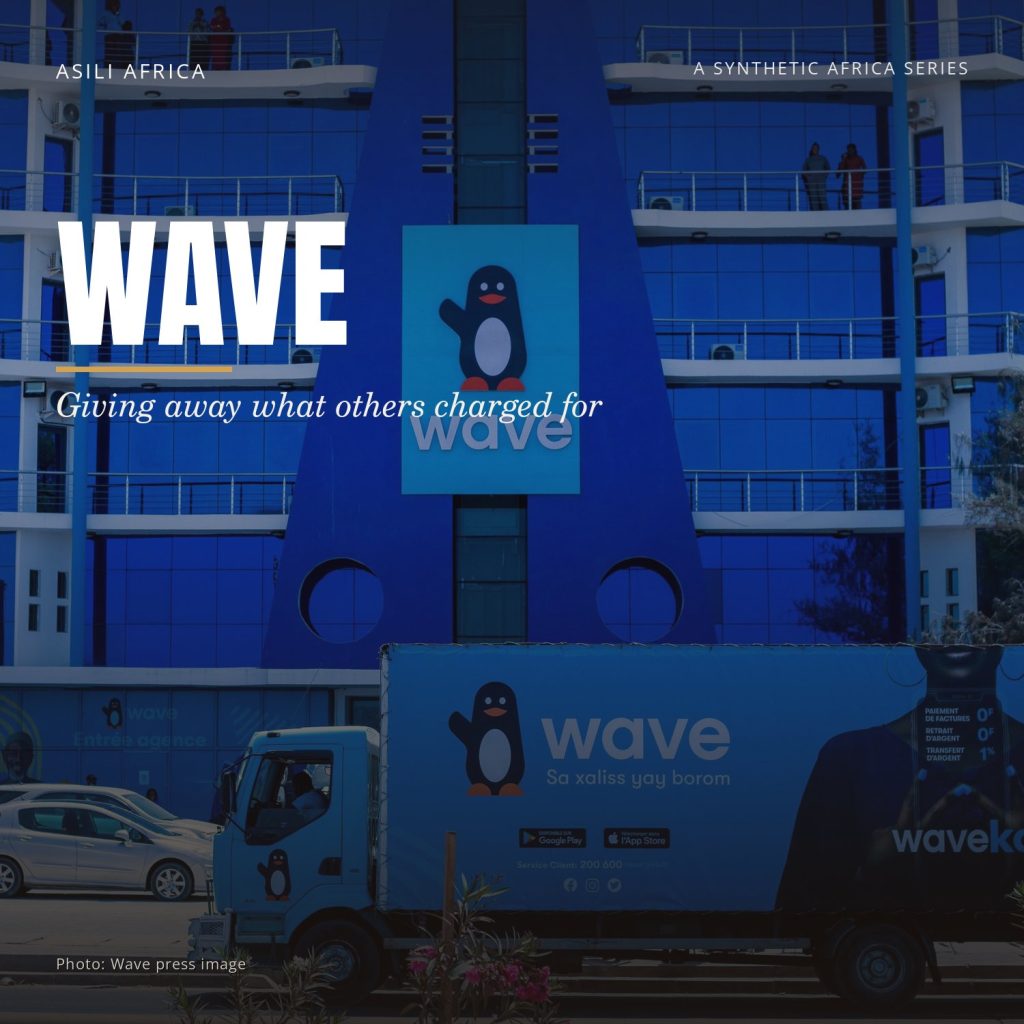
The Wave Story: Two American roommates from Brown built a mobile-money app in Dakar
In March of twenty twenty one, across the city of Dakar, hundreds of thousands of people opened the same app at the same time to do the same small thing. Buy a little phone credit. Top up their airtime.
And the app said no.
The airtime they were trying to buy belonged to Orange, the largest telecom in Senegal. And Orange had just decided to stop selling it through the app they were using. The app was called Wave. It was barely two years old. And the most powerful telecom in Francophone Africa had just declared war on it.
Now, on paper, this was a fight Wave should have lost. Orange owned the network. Orange owned the towers. Orange owned the airtime. Wave owned nothing but an app and a promise. The promise was a single number.
One percent.
Where everyone else charged five, eight, ten percent to move your money, Wave charged one. And putting cash in, taking cash out — the thing every other company on the continent made its money on — Wave gave away for free.
So the telecom tried to strangle it.
It did not work. Six months after the airtime went dark, this two year old fintech, run by two Americans out of an office in Dakar, became the first unicorn in the history of Francophone Africa. Worth one point seven billion dollars. And one of the people who wrote a check was the man who runs OpenAI.
This is the story of Wave. The app that beat a telecom at its own game, by charging almost nothing.
This is Asili Africa.
The Terminal Leg
The story begins in a dormitory at Brown University in the autumn of two thousand four. Two freshmen, hallmates, end up friends. One is Drew Durbin. The other is Lincoln Quirk. They both graduate in two thousand eight. Quirk studies computer science. Durbin, by his own telling, had written down a goal back in a ninth grade ethics class — to build a product that helped a million people.
After Brown, Durbin moves to Tanzania. He starts a social enterprise making handcarts out of recycled materials. It does not scale. He starts a second one making solar cookers. That one does not scale either. Two failures, back to back, in the same hard market.
But somewhere in those failures, Durbin lands on a conclusion that will define the rest of his life. The thing holding everything back, he decides, is not carts or cookers. It is the cost of moving money. In his words — money is in constant motion, and if you can help people move it more efficiently and more cheaply, you change everything.
So in twenty fourteen, Durbin and Quirk build a company around exactly that. They call it Sendwave. It is a smartphone app for people in the diaspora sending money home to Africa. At the time, Western Union and MoneyGram took around seven percent of every transfer. Sendwave did it for about three, almost instantly.
It worked, fast. Within six months of launch, Sendwave was the single largest remitter of money from the United States to Kenya. From there it spread across corridor after corridor. And in August of twenty twenty, the British company WorldRemit agreed to buy Sendwave in a deal worth more than five hundred million dollars in cash and stock.
Two roommates from Brown had built a company, and sold it, for half a billion dollars.
That exit is the financial spine of everything that comes next. It gave the founders capital, it gave them credibility with the biggest venture firms in America, and it gave them a pattern that worked — cheap, mobile first money movement aimed at African corridors.
But it also left Durbin staring at a problem he had not solved.
Sendwave had made the cross border part cheap. Sending the money was now easy. The problem was what happened when the money landed. A family in Senegal might pay three percent to receive a transfer, and then pay another five, eight, even ten percent to a company like Orange Money just to pull that cash out of the wallet on their phone.
The expensive part was not the long journey across the ocean. The expensive part was the last few feet. The walk from the phone to the cash.
Durbin had a name for it. The terminal leg. The final leg of the money’s journey, controlled by the mobile money operators who owned the agent networks — Orange in Senegal, Safaricom in Kenya, MTN across much of the rest. They controlled the cash out, so they took most of the value.
Sendwave had attacked the cross border leg. The next company would attack the terminal leg. It would go after the most expensive few feet in African finance.
And it would do it in Senegal.
Free
Even while Sendwave was still running, Durbin started a second project. A side experiment, at first. A mobile money app of its own, built for Senegal. They called it Wave.
It piloted in twenty sixteen. It went live commercially in twenty eighteen, with Durbin stepping in as full time chief executive on the first day of January that year. And it launched with a price list that, to everyone already in the industry, looked like a mistake.
Putting cash into your Wave account. Free. Taking cash out. Free. Sending money to another Wave user. Free. And for everything else, transfers across networks, a single flat fee. One percent.
Remember, the incumbent, Orange Money, was charging somewhere between five and ten percent on a typical transaction. Wave was undercutting the most powerful company in Senegalese finance by as much as eighty percent. And the part that mattered most — cash in and cash out, the deposits and the withdrawals — that was the exact line of business that every mobile money operator on the continent lived on. Wave just gave it away.
This was not generosity. It was the Amazon playbook, and the founders said so openly. Lose money on the thing that brings people in. Make it back on volume, and on everything you can sell them later. Wave’s own chief technology officer, Ben Kuhn, would later estimate that the company was saving Senegalese users around two hundred million dollars a year. About one percent of the entire economic output of Senegal.
To pull it off, Wave built differently. No bank branches. Instead, an army of agents at corner kiosks. Kuhn liked to point out that the biggest banks in Senegal had around forty branches each, while Wave had more than a hundred times as many agents. And while the incumbents made you fight through clunky phone menus that charged you for every session, Wave was a clean app, with free cards carrying a simple printed code for anyone whose phone was too basic to run it.
The other thing Wave did was hire Coura Carine Sène.
Sène was Senegalese, French trained, an engineer who had spent more than a decade as a project manager in the French insurance industry before deciding to come home to Dakar in twenty twelve, specifically to work on digitising Africa. She joined Wave in twenty eighteen to run business development in Senegal. In time she would become the single most quoted executive at the company, the public face of the whole story. Which mattered, quietly, because the two founders were not African, and Wave was building African infrastructure. Sène was the answer to a question the company knew people would eventually ask.
And it grew. Quietly at first, then not quietly at all. By June of twenty twenty, Wave had crossed one million users.
That is when Orange stopped being polite. Because at one percent, with free withdrawals, Wave was not just competing with Orange Money. It was making Orange Money’s entire business model impossible to defend. So in March of twenty twenty one, Sonatel, the company that runs Orange in Senegal, cut Wave off. It blocked Wave from selling Orange airtime through the app.
Wave could still sell airtime for the other networks. Just not Orange’s. The largest telecom in the country had decided to choke the upstart on the one product it controlled.
The war was on. And down at the bottom of it, the people who felt it first were the agents. One Dakar agent, Ousmane Fall, watched his daily earnings get cut by more than half as the price war ground commissions down. In Côte d’Ivoire, agents went on strike. The fight at the top was reaching all the way down to the corner of the street.
The Regulator
Wave did not retreat. It expanded.
In April of twenty twenty one, Wave launched in Côte d’Ivoire, the second giant economy of Francophone West Africa. Within two months, Orange’s market share there had fallen by eight point seven percent. Wave was not just surviving the war. It was opening a second front.
Then, on the seventh of September twenty twenty one, came the moment that changed everything. Wave closed a Series A funding round of two hundred million dollars, at a valuation of one point seven billion. It was, at the time, the largest Series A in the history of African startups. The investors were a who’s who of global venture capital — Sequoia Heritage, Founders Fund, Stripe, Ribbit Capital, with Partech and the chief executive of OpenAI, Sam Altman, writing checks alongside.
With that round, Wave became the first unicorn in the history of Francophone Africa.
Think about what that meant. A region that the global venture world had spent decades ignoring, written off as too small, too French, too hard, had just produced a billion dollar technology company. And it had done it not by partnering with the telecom giant, but by attacking it.
The validation kept coming. In April of twenty twenty two, the central bank of the West African monetary union, the B C E A O, granted Wave an electronic money license. Wave was the first company that was neither a bank nor a telecom ever to hold one. It no longer needed to hide behind a partner bank. It was now, in the eyes of the regulator, real financial infrastructure.
But the cleanest victory was still the airtime war. Back in June of twenty twenty one, Coura Sène’s team had filed a formal complaint against Sonatel with the A R T P, Senegal’s telecoms regulator. They argued the block was anti competitive, a violation of the country’s electronic communications code. The fight played out in public, in the pages of Jeune Afrique and The Africa Report, for more than a year. Orange executives called Wave predatory. One compared it directly to Amazon, said it was burning cash to kill the competition.
Wave never really denied it.
And on the thirteenth of November twenty twenty two, the regulator ruled. The A R T P forced Sonatel to restore Wave’s access and to apply, without exception, the principles of equal treatment and non discrimination. Orange had to let Wave sell its airtime, on the same terms it gave its own subsidiaries.
A Francophone African regulator had ruled against the most powerful telecom in the country, in favour of a two year old fintech. The cost moat that Orange had relied on for years turned out to be something the law would not protect.
Wave had won the war.
And almost immediately, it discovered that winning Senegal was not the same as winning Africa.
The Winter, and Uganda
The growth was real, and fast. By twenty twenty two, Wave was pushing into Mali, Burkina Faso, and The Gambia, then Sierra Leone, building an agent network that would eventually pass a hundred and fifty thousand people. It launched in Uganda in late twenty twenty one, its first English speaking market.
And that is where the story turns.
In June of twenty twenty two, the global venture winter arrived. Money got expensive. Investors everywhere pulled back. And Wave, which had been expanding hard on the assumption that capital would keep flowing, had to cut. It laid off around three hundred people, about fifteen percent of its staff. The cuts fell hardest on the newest markets — Uganda, Mali, Burkina Faso. The company said, plainly, that it was scaling back so it would not have to depend on raising new money in a market where investors were running scared.
Leadership called it one of the hardest decisions the business had ever made.
To steady the core, the development finance world stepped in. In July of twenty twenty two, the International Finance Corporation, the I F C, led a ninety million euro debt facility, with a syndicate of European development funds alongside. Wave was no longer just a venture story. It was now an impact and development finance story too.
But Uganda was the deeper lesson. In Senegal, Wave had beaten Orange because Orange’s prices were soft and its agent network was thin. In Uganda, the incumbents were different animals. MTN and Airtel together controlled more than ninety five percent of the market, and they had built deep agent networks first, exactly the way Safaricom had with M-Pesa in Kenya. Wave’s price weapon, the one that shattered Orange, barely scratched them. Filings would later show Wave’s Ugandan losses widening year after year. A second round of cuts reportedly took the local team from around a hundred and eighty people down to roughly twenty five.
The pattern was becoming clear. Wave was dominant in Francophone West Africa, sub scale in Central Africa, and structurally stuck in the East. The playbook that broke Orange did not break the M-Pesa style incumbents who had gotten there first.
And then the incumbents started copying Wave.
By twenty twenty four, MTN had gone free on withdrawals in Côte d’Ivoire. Orange in Cameroon had cut peer to peer transfers to zero. Orange itself, in Senegal, had already slashed its blended fees by around eighty percent to compete. A withdrawal of five thousand francs that once cost three hundred and fifty francs now cost twenty five. The very price moat Wave had built, the one percent wall, was being torn down by the giants it had embarrassed.
The hardest blow came on the thirtieth of September twenty twenty five. The B C E A O, the same central bank that had legitimised Wave in twenty twenty two, launched a new instant payment network for the whole West African monetary union. The launch list named thirty one approved entities. Wave was not on it. Neither was MTN. The regulator that had once protected Wave was now building the future rails of West African money, and leaving Wave on the outside, pending paperwork the company had not yet finished.
The disruptor had a sudden, uncomfortable taste of what it felt like to be on the wrong side of the gatekeeper.
Can A Payments App Become A Bank?
So Wave did the only thing that could outrun a copied price. It decided to stop being a payments app, and become a bank.
On the fourth of August twenty twenty five, Wave incorporated a new company in Abidjan. Wave Bank Africa S A. A fully licensed commercial bank, capitalised at twenty billion C F A francs, around thirty two million dollars. Its chair was Coura Sène. The logic was simple and profound. A payments license let Wave move money. A banking license would let it hold deposits, pay interest, and above all, lend. The next moat would not be price. It would be the balance sheet.
To fund the push, in June of twenty twenty five Wave raised another one hundred and thirty seven million dollars in debt, this time led by Rand Merchant Bank, with British International Investment, Finnfund, and Norfund alongside. Total disclosed funding now sat north of four hundred and thirty million dollars.
Then the products started arriving. On the ninth of February twenty twenty six, Wave, Visa, and Ecobank Senegal launched a virtual Visa card inside the app — giving millions of West Africans, for the first time, an easy way to buy from the global internet. And the company moved deeper into the state itself, signing a partnership to digitise payments across Senegal’s public hospitals, with the health minister calling electronic payment a sustainable standard for the country’s healthcare.
Where does that leave Wave, in the middle of twenty twenty six? Twenty million monthly users. A hundred and fifty thousand agents. Three thousand employees across eight countries. In Senegal alone, around eleven million users, close to ninety percent of the adult population. Wave is no longer a startup. It is the default way an entire country moves money.
But the question is no longer whether Wave can take customers from Orange. It already did. The question is whether a company built to give away the one thing banks charge for can now become the bank. Whether it can turn twenty million wallets into twenty million bank accounts before the incumbents finish copying everything that made it special.
That is the bet. And it is being placed by two founders who are not African, who came out of an effective altruism reading group at Brown two decades ago, and who are now trying to build something durable enough to outlast the price war they started.
The story of Wave is the story of a simple, almost stubborn idea. That the cost of moving money in Africa was a bug, not a fact of life. That the most expensive few feet in African finance could be made free.
Two roommates believed it. A Senegalese engineer carried it. A regulator upheld it. And a telecom giant was forced, in the end, to cut its own prices by eighty percent to survive it.
Now Wave has to prove the second act is possible. That the app that beat the bank can become the bank.
This is Asili Africa. Every empire has an origin.
Key Takeaways
- The Terminal Leg. The story begins in a dormitory at Brown University in the autumn of two thousand four.
- The Regulator. Wave did not retreat.
- The Winter, and Uganda. The growth was real, and fast.
- Can A Payments App Become A Bank?. So Wave did the only thing that could outrun a copied price.
Also available on YouTube — search “Asili Africa” or subscribe to our channel.