
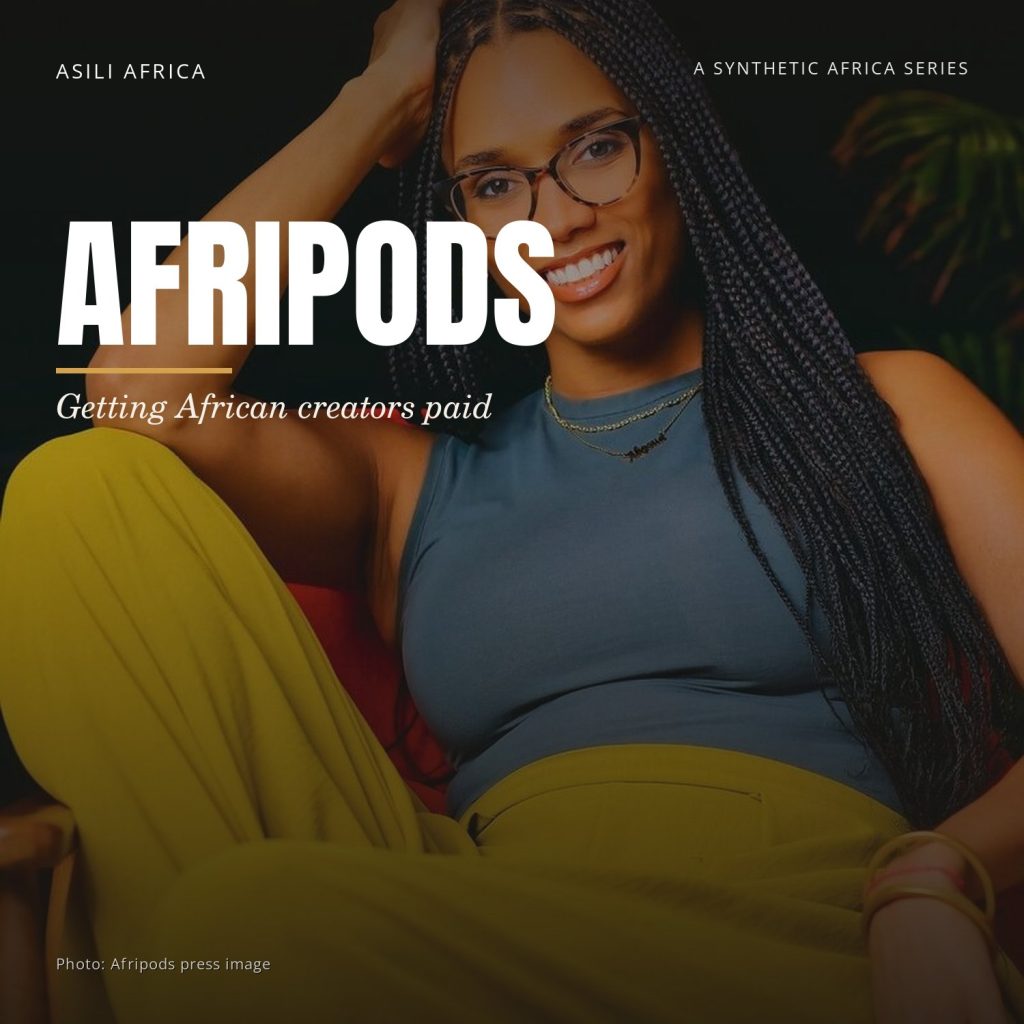
The Afripods Story: The pan-African podcast platform built from Nairobi that let African creators
For most of the 2010s, the podcast boom was one of the great gold rushes in modern media. Billions of dollars. Hundreds of millions of listeners. Spotify, Apple, Google, all racing to own the world’s ears.
And the entire industry agreed, more or less silently, on one thing about Africa. Africa would listen. Africa would not be paid to speak.
A creator in Kisumu could build an audience across three countries — and then hit a wall the moment she tried to collect a single shilling. The payout form wanted a US bank account. A routing number. A tax ID from a country she had never set foot in. The audience was real. The money was unreachable.
In August of 2019, in a co-working space in Nairobi called Nairobi Garage, a small team launched a platform built to tear that wall down. They called it Afripods.
It would become the most-used homegrown podcast platform on the continent. It would pay African creators directly. And the strangest part of its story — the part nobody puts on the poster — is who built it.
This is the story of Afripods.
Built Quietly, and Not by Who You’d Think
To understand why Afripods exists, you have to start with the most important fact about media in Africa. It is the most radio-dependent continent on earth.
For three generations, radio has been the trusted, ubiquitous, default medium — in cities and villages, in English and Swahili and Yoruba and Luganda and dozens of languages the global platforms had never indexed. If you wanted to reach Africans, you did not build an app. You bought airtime.
The founding insight behind Afripods was simple to say and hard to build. Take the trust and the reach of African radio — and move it on-demand, and mobile-first, onto the internet. Aggregate the continent’s audio in one place. Make it as easy for someone in Nakuru to publish a show as it was for someone in Los Angeles.
The timing, around 2017, was finally right. Smartphone penetration was surging. Data prices were falling. Spotify had only just arrived across most of Africa, in 2018. And a first wave of breakout African shows — Legally Clueless, The Fabiola Podcast — had proven that the demand was real, that Africans would not only listen, but listen to each other.
So Afripods was built. Quietly. And here is where the story gets honest.
The platform that would become famous for letting African voices route around foreign gatekeepers was, in its origin, not founded by an African.
The contemporaneous record — the trade press of 2019 and 2020 — names the founder and first chief executive as a Swedish serial entrepreneur called Henrik Barck.
Barck was not a tourist in technology. He had spent roughly two decades in digital media. His credibility anchor was a company called Readly — the so-called “Spotify for magazines,” a digital-magazine subscription service he co-founded in 2012, which went public on the Nasdaq exchange in Stockholm in September of 2020. He had already built one successful subscription-content platform before he ever turned his attention to African audio.
And he did not build Afripods alone, or as a lone bootstrapper. Afripods was incubated inside a venture studio — a firm called LEVELS, which still lists Afripods among its portfolio companies. A venture studio is a kind of company factory. It builds startups deliberately, in-house, one after another. That is precisely why “built quietly” is the right phrase. Afripods was not launched with a splashy funding announcement and a unicorn pitch. It was assembled, methodically, inside a studio.
The entity itself tells the story in miniature. To this day, the company registers and brands itself as “Afripods AB” — and “AB,” Aktiebolag, is the Swedish corporate suffix. A pan-African platform, headquartered in Nairobi, carrying a Swedish company structure in its name.
So in August of 2019, the team moved into Nairobi Garage — the Kilimani co-working space that has incubated a good slice of Kenya’s tech scene — and switched the platform on.
At launch, Afripods hosted somewhere north of a hundred podcast channels. It did the unglamorous, essential plumbing of podcast hosting: a creator uploaded audio, and Afripods stored it, generated the RSS feed that the rest of the podcast world runs on, and pushed the show out to Spotify, to Apple Podcasts, to Google, to Castbox — and to its own web player and Android app.
Every product decision was shaped by the African reality the global platforms ignored. The upload flow needed nothing but, in the company’s own words, “a microphone and a computer or a smartphone.” The app was lightweight, because data was expensive. It supported offline downloads, because connectivity was intermittent. This was not Silicon Valley’s always-on streaming model bolted onto Africa. It was designed, from the first line of code, around how Africans actually got online.
The mission, at this stage, was Barck’s framing — aggregate Africa’s podcasts in one place. Clean, technical, ambitious.
The deeper mission — the one about who gets to record African history, and who gets paid for it — had not arrived yet.
That arrived with a different person.
The Monetization Desert
Launching the platform was the easy part. Surviving the market was not.
The first and most brutal problem was money. African podcast advertising spend, in 2019, was effectively zero. There was no meaningful ad market to plug a creator into. As the company itself would later put it, with no spin: “Today there are no platforms paying African creators.” Most podcasters on the continent self-funded their shows — buying their own equipment, donating their own time, building audiences with no path to a single dollar of return.
This is what the research calls the monetization desert. And it sat underneath everything. You can host a creator’s audio for free. You can distribute it everywhere. But if she can never earn from it, eventually she stops recording. The supply side dies of attrition.
The second problem was an assumption — a global, default, rarely-questioned assumption — that Africa was a consumer market and nothing more. The big platforms and the big advertisers did not believe African audio production was worth investing in. They did not believe African ad inventory was worth buying. So Afripods was not just building a product. It was trying to prove that the supply even existed — that there were African creators worth paying, making content worth hearing.
The third problem was the gates themselves. An African creator in 2019 faced a stack of them. Distribution — the global directories were built around US and European payment and tax systems. Payment — and this was the wall — you simply could not get paid without a US, UK, or EU bank account. And discovery — the algorithms surfaced Western shows, so even a brilliant African podcast struggled to be found. On top of all three sat the oldest gate of all: traditional African media, the radio and television broadcasters, who for decades had held editorial control over whose voice got heard at all.
And the fourth problem was simply the ground. Expensive data. Fragmented, low-end Android devices. Patchy connectivity. Every one of those shaped what Afripods could ship, and slowed it down.
In December of 2019, Afripods made one of its first strategic moves against this — a partnership with a Kenyan audio startup called PortableVoices, for production and distribution. It was a signal that the platform intended to help make content, not just host it.
But the real turning point in this early period was not a deal. It was a hire — or, more precisely, a change at the top.
Around 2020 and into 2021, a new chief executive stepped into Afripods. Her name is Molly Jensen.
Jensen is Ghanaian-American. She was born in New York. She has a business degree in marketing from George Washington University, and a past as a Division One college athlete, and more than a decade across sales, marketing, people management, and technology. By her own account, she stepped into the role as CEO with a small investment, after investors identified the audio opportunity. And she moved her life to Kenya to do it — by 2025 she would describe herself as entering her fifth year in the country.
What Jensen brought was not code. The platform already worked. What she brought was a mission — and the words for it.
She has said, plainly, that she “felt embarrassed as an African” that she relied on Western media to understand the world. She wanted a platform where, in her phrase, “African history could be recorded by Africans.” She had grown up aware of the reach and the trust of African radio, and she wanted to inherit it.
And so the company’s reason for existing quietly shifted. It was no longer just “aggregate Africa’s podcasts in one place.” It was now: get African creators paid, and build the largest library of African audio stories on the planet.
That second mission needed the company to solve the one problem nobody else would touch. The payment gate.
The Wall Comes Down
The single most important thing Afripods ever did — the thing that justifies this entire episode — was this. Around 2021, it became the first platform to pay African creators directly. No US bank account. No UK account. No EU account. No tax ID from a country you’d never visited.
It is hard to overstate how large that wall had been. For the entire history of global podcasting, the payment gate had been the quiet, decisive barrier — the reason an African creator with a real audience still earned nothing. The technology to publish had been democratised years earlier. The technology to get paid had not. Afripods, from Nairobi, built the piece the trillion-dollar platforms never bothered to.
This is the pivot. Not a pivot away from the original idea — a pivot into its real purpose. Afripods stopped being “a podcast host that happens to be African” and became “the platform that lets Africa profit from its own voice.”
And once that was true, the platform’s credibility compounded fast.
In 2021, Afripods landed a partnership that would have been unthinkable for a two-year-old startup in most other framings — a deal with the Nation Media Group, the largest media house in East Africa, to host the Nation’s podcasts. For a company whose whole thesis was routing around the traditional broadcasters, getting one of the biggest of them to publish through your pipes was an enormous validation. The gatekeeper, in effect, had become a customer.
Then, in 2022, came the external stamp. The Baraza Media Lab — an independent Kenyan media-development organisation — published a report that named Afripods the most-used homegrown podcast platform in Africa. Not the most-funded. Not the most-hyped. The most-used. The one African creators actually reached for.
By this point the library that Jensen had described as her ambition was becoming real. Afripods was hosting shows in something like fifty languages, from more than thirty African countries — Xhosa, Kikuyu, Yoruba, Luganda, and dozens more the global directories had never properly surfaced. This was the literal building of “the largest library of African audio stories on the planet” — one upload, one country, one language at a time.
But notice what scaling a library across thirty countries and fifty languages actually required. It was not signing up shows that already existed. It was evangelising podcasting itself — persuading people who had never made a podcast that they could, and that here, for once, they might even get paid for it.
Afripods was no longer just competing for a slice of a market. It was trying to call a market into being.
And that ambition would lead it to a much bigger idea than independent creators. It would lead it back to radio.
Stealth Mode, and the Return to Radio
Here is the second insight that built Afripods, and it folds neatly back into the first.
If Africa is the most radio-dependent continent on earth — if radio holds the trust, the languages, and the audiences — then the largest untapped library of African audio was not waiting to be created by new podcasters. It already existed. It was being broadcast, live, every single day, by hundreds of radio stations, and then vanishing into the air.
So Afripods built a product to capture it. They called it Broadcast-to-Podcast. The idea: take a radio station’s existing output and convert it, automatically, into on-demand podcasts — giving the station a second life for its content, a new digital audience, and a new way to be measured and, eventually, monetised.
They built it, in the company’s own description, in stealth mode — quietly, for nearly two years. There is that word again. Quietly. It is the most Afripods way to build anything.
On the eighteenth of August, 2023, they announced it. And the numbers they reported were the kind that make an industry look up. Stations that adopted Broadcast-to-Podcast saw, over six months, an eight-hundred-and-ninety-five-per-cent increase in streams. The product was already live across more than a hundred and ten radio stations, in eight countries, in more than ten languages — with a stated goal of fifteen markets and twenty languages by the end of that year.
Now — a note of honesty, because this is Asili. Those are 2023 figures, and they are reported by Afripods itself. The company is privately held. It has never disclosed its revenue, its valuation, its total funding, or how much money has actually reached creators’ pockets. We are not going to put a dollar figure on this business, because no honest one exists in the public record. The story of Afripods is a story of traction and influence — not of a balance sheet.
What the company did attract was pedigree. Afripods has publicly referenced bringing on a senior commercial leader and investor who had co-founded Acast — one of the global podcast industry’s biggest names — and served as a Spotify managing director for the Nordic region. For a Nairobi platform to pull in that level of global audio experience was its own kind of validation.
And Jensen became the face of the African podcast movement, well beyond Afripods. She took the stage at South by Southwest in 2025 — the global culture-and-technology festival in Texas. In February of 2025, Afripods co-organised Africa Podcast Day, alongside other pillars of the ecosystem. The platform had become not just a product, but an institution — one of the organisations that the African audio industry now organises itself around.
All the while, the map kept filling in — pushing into lower-visibility markets like Uganda and Zambia, places the global platforms still barely served.
Afripods had scaled. But the shape of that scale raised a question the company is still answering.
A Producer Continent, or Still a Consumer One?
In the middle of 2026, Afripods is operational and active — website, Android app, and social channels live. It still pitches itself as amplifying Africa, still building toward the largest library of African audio stories, still hosting in up to fifty languages across more than thirty countries.
Its clearest growth engine today is Broadcast-to-Podcast — converting radio into on-demand audio for African broadcasters. And that is worth sitting with for a moment, because it is a quiet shift in what Afripods is. The company that began by promising to route African creators around the old gatekeepers now grows fastest by serving the biggest gatekeepers of all — the radio stations. Its centre of gravity may be moving, from the independent creator in her bedroom studio to the institutional broadcaster.
There are real shadows on the horizon. The global giants — Spotify, Apple, Google, YouTube — have all moved into African audio, and Afripods is a small player against them. Its defences are real but narrow: deep localisation, language depth, mobile-and-offline design, the payment solution, and the radio pivot. And there is a fresh complication worth flagging, not over-reading — the Nation Media Group, Afripods’ marquee 2021 partner, was sold to Tanzanian-linked Azizi interests in early 2026. What that means for the partnership, nobody outside the deal yet knows.
But the question that actually closes this story is the one the whole episode has been circling.
For a decade, the global audio industry assumed Africa was a consumer market — a place that listens, and never speaks, and certainly never gets paid to. Afripods set out to prove the opposite. To prove Africa is a producer continent.
Has it? The affirmative case is real: the most-used homegrown platform, radio stations across eight countries adopting its technology, and — the thing that matters most — African creators getting paid directly, for the first time, by a company that built the wall-breaker the trillion-dollar platforms never would.
The unfinished case is just as real. Monetization at continental scale is not proven. The financials are a black box. And the company is, still, defending a small patch of ground against giants.
And there is one more truth this series will not skip. The platform built to let Africans tell their own stories was itself founded by a Swedish entrepreneur, inside a venture studio, before a Ghanaian-American chief executive gave it its mission and its voice. That is not a flaw in the story. It is the most honest version of the African-technology story there is — built with foreign hands and foreign capital, then claimed, led, and given meaning by Africans. Afripods does not hide it. Neither should we.
Every empire has an origin.
Afripods’ origin was a quiet launch in a Nairobi co-working space in 2019 — a Swedish-built, studio-incubated platform, claimed by an African mission, with one radical idea: that an African voice deserved to be heard, and to be paid.
It did not build the loudest company in African tech. It built one of the most useful — a set of rails for a continent’s voice. And the question it leaves open is the best kind: not whether Africa can listen, but whether the world is finally ready to pay Africa to speak.
This is Asili Africa.
Key Takeaways
- Built Quietly, and Not by Who You’d Think. To understand why Afripods exists, you have to start with the most important fact about media in Africa.
- The Wall Comes Down. The single most important thing Afripods ever did — the thing that justifies this entire episode — was this.
- Stealth Mode, and the Return to Radio. Here is the second insight that built Afripods, and it folds neatly back into the first.
- A Producer Continent, or Still a Consumer One?. In the middle of 2026, Afripods is operational and active — website, Android app, and social channels live.
Also available on YouTube — search “Asili Africa” or subscribe to our channel.