
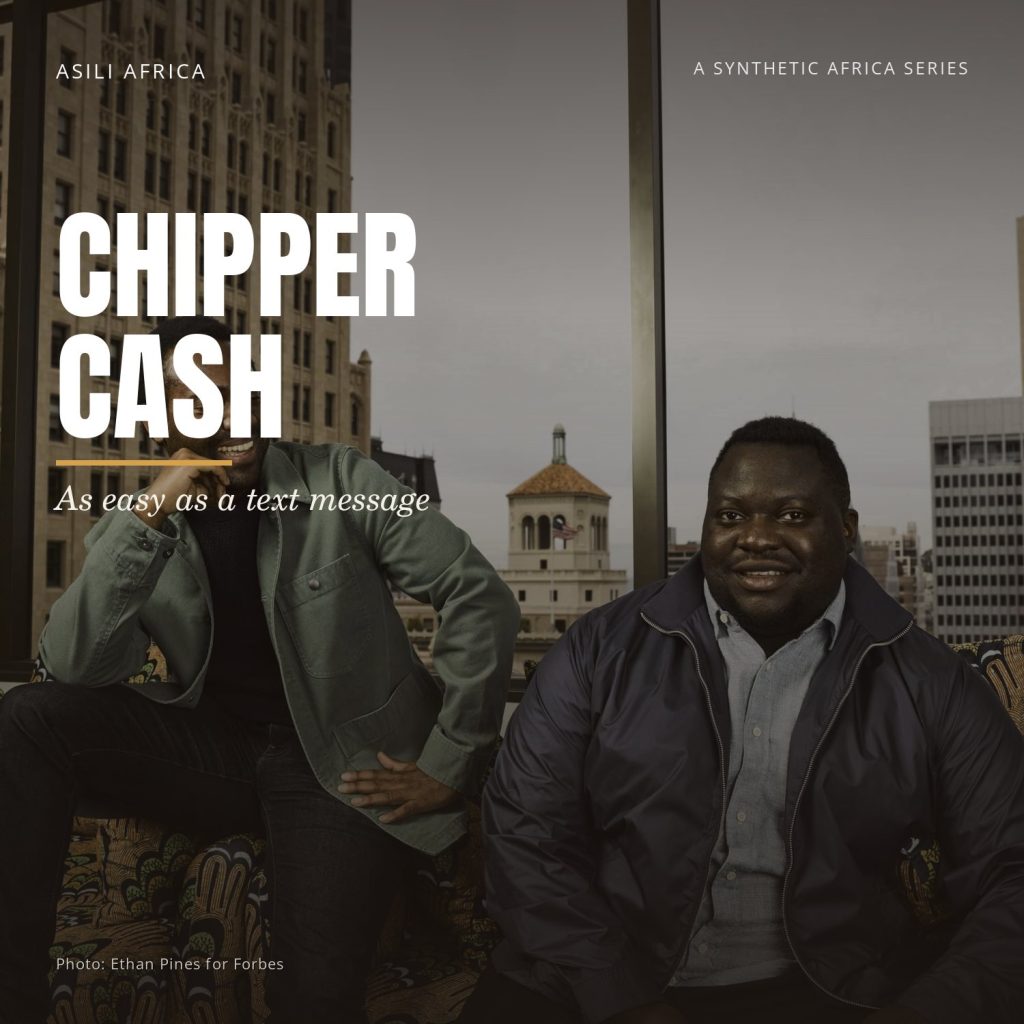
The Chipper Cash Story: The P2P app that raised $300M then stumbled
On the eleventh of November, twenty twenty two, a Bahamas based crypto exchange called F T X filed for bankruptcy.
The story made global news for a long list of reasons. Eight billion U S dollars in customer money missing. A young founder named Sam Bankman Fried under federal investigation. A celebrity studded board collapsing in a single weekend.
On the seventh floor of a small office building in downtown San Francisco, an African engineer named Ham Serunjogi opened a different headline on his phone.
One year earlier, F T X had led a one hundred and fifty million U S dollar funding round into Ham’s company. The round had valued his company, Chipper Cash, at two point two billion U S dollars. It had made Chipper Africa’s seventh unicorn. It had put Jeff Bezos, Silicon Valley Bank, Ribbit Capital, and the most famous name in crypto on the same cap table.
Now the most famous name in crypto was in bankruptcy court.
Two friends from a small college in Iowa had built a company worth more than two billion U S dollars in less than three years. In a single weekend, the company they had built was about to be cut in half.
The thing they had been told would save them was the very thing that was about to nearly kill them.
This is the story of Chipper Cash. The pan African remittance company that rode the cheapest capital in the history of African fintech to the top, and then had to teach itself how to walk on its own legs.
This is Asili Africa.
The Iowa Friendship
Ham Serunjogi was born in Gaba, a suburb of Kampala, Uganda. He grew up swimming. By his late teens he was a competitive freestyle swimmer, racing for Uganda in regional meets. The swimming, more than the grades, was what carried him out of the country.
In twenty twelve, he arrived at Grinnell College, a small liberal arts school of about seventeen hundred students set on a quiet corner of Iowa. He came on a swimming scholarship. He chose to study economics.
That same autumn, on a different part of the same campus, a Ghanaian computer science student named Maijid Moujaled was beginning his own degree. The two of them met, almost inevitably, at the small overlap on Grinnell’s campus where international students gathered. Two Africans, in a small college in Iowa, in the middle of an American winter.
They became friends. They graduated, separately, into the Bay Area job market.
Ham went to Facebook. He worked in growth and product roles, then briefly at a Y Combinator backed wedding startup called Zola. Maijid went to Flickr and then to Yahoo as a software engineer. They saw each other when they could. They shared the unspoken understanding of two African graduates who had spent the previous four years explaining to American classmates where their countries were on a map.
In the summer of twenty sixteen, the two of them took a road trip together. The exact route does not matter. The conversation does.
Ham had recently tried to send money to his father, in Uganda, from his Facebook salary in California. The transfer had been slow. The fees had been steep. There were intermediaries he had never heard of taking a percentage at every leg of the journey. He was, by every reasonable measure, an upper middle class Bay Area engineer, and he was being charged close to ten percent to send a few hundred dollars to his own father.
The math made no sense to him. The friction made no sense to him. He kept asking, in the way that engineers ask, why.
By the end of the road trip, they had a single line on paper. They wanted to make sending money across Africa as easy as a text message.
They went back to their jobs. They sat on the idea for almost two years.
In the spring of twenty eighteen, Ham sent Maijid a message. He said it was time.
Ham quit his job at Facebook. He packed what he owned into a single bag. He moved into Maijid’s studio apartment in San Francisco. There was no spare room. He slept on an air mattress in the kitchenette. They lived off Maijid’s salary at Flickr and about thirty thousand U S dollars in combined savings.
Patrick Triest, an American software engineer who had worked at Google, joined the founding team as the technical lead. Three people in one studio. One air mattress. One thesis.
In July of twenty eighteen, the three of them launched a test product. It moved money between Uganda and Ghana, in local currency, on a phone number, with no fee.
The competitors charged eight to ten percent on a small African remittance. The new product charged zero. The plan was to make the money on the foreign exchange spread underneath, and on whatever venture capital they could raise to subsidise the early years.
The pitch was a single sentence. Venmo for Africa.
Three founders, two African and one American, in a kitchenette in San Francisco, with thirty thousand dollars in the bank and a working product that moved money between two African countries. That was the company.
Fifty Rejections and a Licensing Slog
The first product worked. The second problem was harder.
The product needed money. The market in San Francisco that handed out money to startups did not, in twenty eighteen, have a coherent picture of African fintech.
Ham, Maijid and Patrick pitched more than fifty venture capital firms. Most of them said no. Many of them said no without taking the meeting. Many more said no after taking the meeting. The reasons were variations on the same theme. The market was too small. The regulators were too complicated. The founders were too young. The competition was too entrenched. The unit economics were not yet proven.
Ham has said, in interviews since, that the deeper reason was simpler. The Bay Area venture capital industry, at that point, had funded almost no African founders for African problems. The pattern recognition that venture capitalists rely on almost always rewards a founder who looks like a founder they have already funded. Two African graduates pitching a free money transfer product into a market most American investors could not name three banks in did not fit the pattern.
In November of twenty eighteen, after months of those no replies, the founders got one yes. A Bay Area accelerator and seed fund called 500 Startups put one hundred and fifty thousand U S dollars into the company. It was the first institutional cheque. It was also enough to extend runway by a few months.
Through the back end of twenty eighteen and into twenty nineteen, the company began the unglamorous work of expanding corridors. Each new market meant a new regulator. The Central Bank of Nigeria. The Bank of Ghana. The Central Bank of Kenya. The Bank of Uganda. The South African Financial Sector Conduct Authority. Each one with its own licensing regime, its own know your customer expectations, its own forms, its own waiting times.
Each new corridor also meant a separate negotiation with the banks and mobile money operators who actually moved the money on the ground. M-Pesa in Kenya. M T N Mobile Money across multiple markets. Airtel Money in Uganda and Tanzania. Each integration was a contract. Each contract was a quarter of work.
By the middle of twenty nineteen the company was live in Kenya, Tanzania and Rwanda. Volume was small. Unit economics were carried by a thin foreign exchange spread and a thinner venture subsidy. But the network was real, and it was growing in the only way an African fintech can really grow, one regulator at a time.
The first publicly disclosed funding round closed quietly in May of twenty nineteen.
Then the world changed.
In March of twenty twenty, the coronavirus pandemic shut down most of the global economy. Airports closed. Western Union queues evaporated. Money transfer agents pulled down their shutters. Diaspora workers who had been sending cash home through informal channels for decades suddenly had no informal channels to use.
Chipper was an app on a phone. It worked.
In June of twenty twenty, Deciens Capital led a thirteen point eight million U S dollar Series A round into the company. Raptor Group joined. The lockdowns kept lengthening. Chipper kept growing.
Later that year, the company quietly launched in Nigeria, integrated Bitcoin trading, and prepared to raise again.
The first phase of the company was over. The bootstrapped, polite, slow building phase. The phase where every corridor had to be earned, every regulator had to be cultivated, every dollar of capital had to be argued for.
The second phase was about to begin. And the second phase was going to be funded by a kind of money the African continent had never been offered before.
The Cheap Capital Era
The capital that flooded into early stage technology between the summer of twenty twenty and the end of twenty twenty one was, in retrospect, an aberration. Interest rates were close to zero. Pandemic stimulus had pushed liquidity into every asset class with a story. Software multiples touched levels they had never touched before. African fintech, for the first time in its short history, became part of that story.
Chipper rode the wave.
In November of twenty twenty, the company closed a thirty million U S dollar Series B. The round was led by Ribbit Capital, the U S fintech specialist firm. Alongside Ribbit, a name appeared that no African startup had carried before. Bezos Expeditions, the family office of Amazon founder Jeff Bezos, wrote its first ever cheque into an African company.
That single piece of news rewrote the conversation around Chipper. Inside Bay Area venture capital, the pattern recognition flipped. African fintech was now investable. Two African founders in a San Francisco studio apartment had pulled the most famous balance sheet on earth onto their cap table.
In May of twenty twenty one, the company closed a one hundred million U S dollar Series C. The round was led by S V B Capital, the investment arm of Silicon Valley Bank. Bezos re upped. Deciens, Ribbit, One Way Ventures, Tribe Capital and 500 Startups all wrote alongside. The valuation crossed one billion U S dollars for the first time. Ham publicly described Chipper as Africa’s most valuable startup.
Six months later, the round was extended.
In November of twenty twenty one, an additional one hundred and fifty million U S dollars came into the company. The lead was a Bahamas based crypto exchange called F T X, through its trading arm Alameda Research. S V B re upped. Ribbit re upped. Bezos re upped. The valuation came in between two billion and two point two billion U S dollars.
Chipper Cash was now Africa’s seventh unicorn.
The strategy widened with the funding. The original product was a free pan African remittance app. By the end of twenty twenty one, the company had layered on Bitcoin and Ethereum trading. Then U S stock investing, with fractional shares of more than six thousand U S listed equities, on a one percent commission. Then a Visa branded virtual debit card. Then a U S dollar card. The Lagos engineer with a Chipper account in twenty twenty one had, on a single phone, a wallet, a brokerage, a crypto exchange and a debit card.
The thesis was no longer remittance. The thesis was an African super app.
The capital agreed. The product surface kept expanding. The headcount climbed past four hundred. Lagos, Nairobi, Kampala, Accra, Johannesburg and London all had Chipper offices.
The two founders who had once slept on an air mattress in a kitchenette were now running an Africa wide consumer financial platform from a downtown San Francisco office, with Jeff Bezos and the most famous balance sheet in crypto on the cap table.
Then, in July of twenty twenty two, the first warning shot landed.
The Crash
On the twenty eighth of July, twenty twenty two, the Central Bank of Kenya publicly named Chipper Cash, along with Flutterwave, as operating in Kenya without remittance and payment licenses. Within days, the bank supervision arm of the C B K ordered all Kenyan banks to cease and desist from dealing with the two companies.
The hit was reputational rather than operational. Chipper kept moving. The Kenyan corridor was one of its largest. Within the company, executives spent the next eighteen months working through licensing remediation with the regulator. Within the press, the headline stuck. A unicorn had been publicly told it was operating outside the perimeter of the law.
Three and a half months later, on the eleventh of November, twenty twenty two, F T X filed for bankruptcy.
The collapse of F T X was a global story. For Chipper, it was a local one. The largest single investor in the company’s last funding round was now insolvent. Within weeks, Financial Times reporters working through leaked Alameda Research documents found a line item. Alameda had, before its own collapse, internally marked its Chipper Cash position down from two billion U S dollars to one point two five billion U S dollars.
The valuation was, on paper, slashed by three quarters of a billion dollars in a single news cycle.
Ham’s public defense was technically correct, and unhelpful. Chipper had received cash, not F T X tokens. The capital was already in the bank. The company had no operational exposure to F T X. The relationship had been passive. But the optics were absolute. African fintech’s most prominent unicorn was now the African company most associated with the largest crypto fraud in history.
On the sixth of December, twenty twenty two, Chipper announced its first round of layoffs. About twelve and a half percent of staff, somewhere north of fifty people, left the company.
The second round came less than three months later. In February of twenty twenty three, the company cut between thirty three and forty percent of remaining headcount, in the range of one hundred and forty employees. In the same window, the C suite emptied. The chief operating officer, Alicia Levine, left. The chief information officer left. The chief revenue officer left. The chief compliance officer left. The global head of marketing left. The Kenya country director, Leon Kiptum, departed.
In the same month, the U K based diaspora remittance company Zepz, formerly WorldRemit, approached Chipper with an acquisition offer. The proposed price was between two hundred and fifty million and five hundred million U S dollars. It was a discount of roughly seventy to eighty percent on the two point two billion peak.
Then, on the tenth of March, twenty twenty three, Silicon Valley Bank failed and was placed into receivership.
Chipper’s deposit exposure to the bank itself was about one million U S dollars, a small fraction of the balance sheet. The bigger problem was symbolic. S V B Capital, the investment arm, was the lead investor on the Series C that had taken Chipper to unicorn status. Within five months, two of the company’s most prominent backers had collapsed. African fintech’s most prominent unicorn was now also the African company most associated with the second largest bank failure in U S history.
Through the middle of twenty twenty three, the Zepz acquisition went into due diligence. The two companies could not agree on what the financial picture inside Chipper actually was. Zepz later said that what it saw during diligence raised viability concerns. Ham later said that Zepz had refused to share its own books. In August of twenty twenty three, the talks collapsed. Each side blamed the other. The public anchor for Chipper’s fair value was now well below five hundred million U S dollars.
A third round of layoffs followed in June. A fourth round, of about fifteen employees, followed in December. Each round was smaller than the last. Each round was, in a quiet way, more damaging than the last.
The thesis had not changed. The product still worked. The corridors still moved money. The fundamental insight that two African founders had named in a rented car in twenty sixteen was still correct.
The funding base that had built the company had simply gone away.
Walking on Their Own Legs
The company that walked out of twenty twenty three was about half the company that had walked into twenty twenty two. The boardroom in San Francisco was leaner. The product roadmap was shorter. The growth story was, for the first time in three years, secondary.
The strategy reset around a single thesis. Chipper would be a cross border remittance specialist. The card product would scale on the back of the remittance flow. The crypto trading product, which had collapsed alongside the global crypto market, would be quietly deprioritised. Stock investing would continue. New geographies would wait.
In November of twenty twenty three, Chipper expanded its partnership with Visa. Over the next year, the company crossed one million virtual cards issued. By the end of twenty twenty four, Chipper was, by Visa’s own count, the largest virtual card issuer in Africa.
On the twenty seventh of March, twenty twenty five, the company announced a partnership with Ripple Payments. The deal added X R P settled cross border rails to Chipper’s diaspora to Africa flows. The crypto story had been rewritten. No longer a retail trading product. Now a wholesale settlement rail.
The Nigerian naira fell roughly seventy percent against the U S dollar between twenty twenty two and twenty twenty five. The foreign exchange margins on Chipper’s largest corridor compressed brutally. The company offset the compression with volume. Slow, unglamorous, corridor by corridor.
In the fourth quarter of twenty twenty five, Chipper Cash posted its first ever quarter of positive free cash flow. On the twenty first of January, twenty twenty six, TechCabal published the headline that codified the turnaround: Chipper Cash posts first quarter without cash burn.
The company is still privately held. The cap table still carries the one point two five billion U S dollar mark from the F T X era. F T X’s stake itself is now a bankruptcy claim, administered by the F T X estate for the benefit of F T X’s creditors. The valuation overhang has not gone away. No new primary round has tested the public market’s appetite.
The exit path is narrower than it once was. The obvious strategic acquirer, Zepz, walked away in twenty twenty three. An initial public offering at a meaningful valuation is years out, if it comes at all. The competitive landscape is more crowded than it was at founding. LemFi, NALA, Sendwave, Wise, Zepz itself, and the mobile money operators all compete for the same diaspora flow.
What Chipper has, in twenty twenty six, is the rarest thing in African fintech. A profitable cross border remittance business with real customers, real corridors, and a real balance sheet. The company that survived is, in almost every way, less interesting to the venture capital ecosystem that minted it.
It is, in a way the founders may now agree with, what they should have been building all along.
The story of Chipper Cash is the story of two friends from a small college in Iowa who set out to make sending money across African borders as easy as a text message.
The cheap capital that built them tried to take them with it on the way out. They walked back into the original sentence on the original road trip. The company that survived is the one they would have built without the rocket.
Every empire has an origin. This one began with an air mattress, in a kitchenette, in San Francisco.
This is Asili Africa. Every empire has an origin.
Key Takeaways
- The Iowa Friendship. Ham Serunjogi was born in Gaba, a suburb of Kampala, Uganda.
- The Cheap Capital Era. The capital that flooded into early stage technology between the summer of twenty twenty and the end of twenty twenty one was, in retrospect, an aberration.
- The Crash. On the twenty eighth of July, twenty twenty two, the Central Bank of Kenya publicly named Chipper Cash, along with Flutterwave, as operating in Kenya without remittance and payment licenses.
- Walking on Their Own Legs. The company that walked out of twenty twenty three was about half the company that had walked into twenty twenty two.
Also available on YouTube — search “Asili Africa” or subscribe to our channel.