
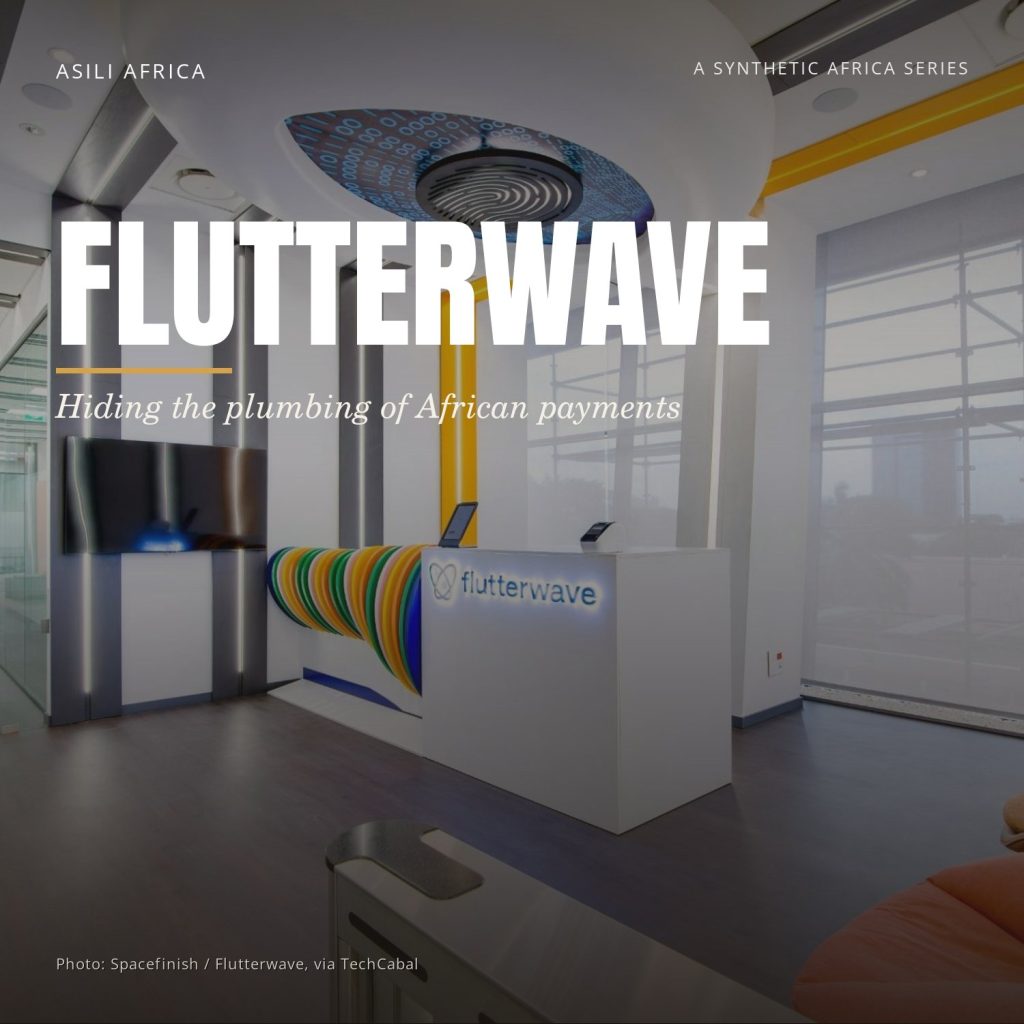
The Flutterwave Story: The fintech that dared to be Africa’s Stripe
On the seventh of July, twenty twenty-two, a Kenyan judge signed an order that froze more than forty million US dollars in the bank accounts of an African company that, four and a half months earlier, had been declared the most valuable startup on the continent.
The company was Flutterwave. Its African operational headquarters was a tower in Victoria Island, Lagos. Its Delaware-registered parent was based in San Francisco. Its founders had built it, in six years, into a payments network that connected merchants in thirty African countries to customers everywhere else.
The Kenyan Assets Recovery Agency alleged that more than two hundred million US dollars of suspicious money had passed through Flutterwave’s accounts in the guise of merchant services. Flutterwave’s response was a single sentence. The claims were entirely false.
That freeze was the third public crisis to hit the company in five months. The first had been a magazine investigation alleging a toxic internal culture. The second had been a Nigerian journalist’s report alleging a phantom co-founder named Greg. And now this. Forty million dollars, frozen.
This is the story of how three founders in a Lagos co-working space tried to build the African Stripe, and how the company they built became, in the same year, both Africa’s most valuable startup and Africa’s most public governance crisis.
The Andela Problem
To understand Flutterwave, you have to begin two years before it existed, inside a different company.
In twenty fourteen, a Nigerian entrepreneur named Iyinoluwa Aboyeji co-founded Andela, a developer-training and outsourcing company headquartered in Lagos. Andela’s business was to train African software engineers and place them as contractors on the teams of American technology companies. By twenty fifteen, Andela had hundreds of Nigerian, Kenyan, and Ugandan developers on the books. And every single one of them needed to be paid, in US dollars, from US-based clients, every two weeks.
The mechanics of those payments were a nightmare. Cross-border transfers from American banks to Nigerian, Kenyan, and Ugandan accounts could take two weeks to clear. The fees on each one were punitive. The only viable workaround was to batch-process transfers every one to three months and absorb the lost time as a cost of doing business. Aboyeji watched the same problem play out at every other African internet company trying to pay or be paid across borders. The continent had no unified payments rail. Every country had its own card scheme, its own mobile money network, its own central bank rule book. No aggregator had stitched them together.
The intellectual model was already in front of him. In the United States, between twenty ten and twenty fifteen, a San Francisco company called Stripe had become the default payments rail for American internet businesses by abstracting away the complexity of multiple banks, multiple card schemes, and multiple acquirers behind a single line of code. The Flutterwave thesis was that the same trick could work for African merchants. One API, one dashboard, one settlement currency, all the African plumbing hidden behind it.
The plumbing it would have to hide was an order of magnitude harder than Stripe’s. Not just Visa and Mastercard, but Verve, the African card scheme run by Interswitch. M-Pesa, the Safaricom mobile money network in Kenya. MoMo, the MTN money network across West and Central Africa. Airtel Money. GT Bank’s USSD rails. The Nigerian instant-pay system known as NIBBS. The Kenyan instant-pay system called Pesalink. And underneath all of it, a regulatory matrix spanning dozens of central banks, each with its own licensing requirements and capital adequacy rules.
The team that decided to take this on was three people.
The first was Iyinoluwa Aboyeji himself. Born in Lagos in nineteen ninety-one, a University of Waterloo graduate, an Andela co-founder, at twenty-five he was the youngest of the three. He was the storyteller, the public face, the man who would write the investor decks and walk into the meetings.
The second was Olugbenga Agboola, known almost universally as G B. Born in Lagos in nineteen eighty-five, with a master’s degree in information technology from the University of Lagos and an MBA from MIT Sloan, Agboola had spent his twenties inside the global payments machine. PayPal as an application engineer. Google, as a product manager on Google Wallet. Standard Bank Nigeria, on biometric payments. And, immediately before Flutterwave, Head of Digital Factory and Innovation at Access Bank in Lagos. He was the technical architect, the product head, the man who actually knew how money moved.
The third was Adeleke Adekoya, a Nigerian banking veteran from the compliance side of commercial banking. He was the licensing brain. He was the partner who knew which Central Bank of Nigeria circular applied to which transaction type, which jurisdiction needed which subsidiary structure, and who would handle the paperwork in every African country the company eventually entered. He never became a public figure. He never held a C-suite title after the founding years. But the legality of every market Flutterwave entered ran through him.
Flutterwave Incorporated was formally registered as a Delaware C-corp on the second of May, twenty sixteen. Operations ran out of a co-working space in Lekki, a district on the eastern edge of Lagos. The product launched commercially under the brand Rave by Flutterwave, a merchant-facing payments API and dashboard. Aboyeji was chief executive. Agboola was chief technology officer. Adekoya handled compliance.
The proof point came almost immediately. Uber had launched in Lagos in twenty fourteen, and by twenty sixteen needed a way to pay thousands of Nigerian drivers in naira while collecting card payments from riders in several currencies. Flutterwave became Uber’s driver-payout partner in Nigeria. The Uber logo became the marquee credential on every subsequent investor deck.
On the seventeenth of July, twenty seventeen, three Silicon Valley venture funds — Green Visor Capital, Glynn Capital, and CRE Venture Capital — wrote the first institutional cheques. By the end of that year, aggregate seed and Series A funding had reached around ten million US dollars. The thesis was working. The merchants were signing up. The plumbing was being built.
And then, fifteen months later, the company’s founding chief executive walked out the door.
The Handover and the Shadow
On the fifth of October, twenty eighteen, Iyinoluwa Aboyeji stepped down as chief executive of Flutterwave.
The publicly stated reason was a strategic pivot to founder investing. Aboyeji would soon launch a venture platform called Future Africa to back the next generation of African founders. He remained on the Flutterwave cap table. He remained, publicly, on cordial terms with the company. The internal reality, per multiple reports that surfaced years later, was more contested. The reports cited disagreements with Agboola over share allocation and governance. The full account would not surface until twenty twenty-two.
Olugbenga Agboola moved from chief technology officer to chief executive. He would never give up the title.
The airline he inherited, to borrow a phrase from another Asili story, was a company that worked but had not yet scaled. Flutterwave processed perhaps a few hundred million dollars a year in payment value. It served a few thousand merchants, mostly in Nigeria. It had won the Uber logo, but most of the rest of the African internet economy still ran on a patchwork of local processors. And it had a shadow. Its name was Paystack.
Paystack had been founded in twenty fifteen, a year before Flutterwave, by two Nigerians named Shola Akinlade and Ezra Olubi. Paystack had been the first West African company ever accepted into the Y Combinator accelerator, in the winter twenty sixteen batch. Paystack had a cleaner brand, a more developer-friendly product, and a public reputation for being the quieter, less dramatic Nigerian payments story. Through the late twenty tens, the two companies grew in parallel, chasing the same merchants, raising from many of the same investors, comparing themselves to each other in every pitch.
Agboola’s strategic response was to accept that Paystack would win the developer brand war, and to take Flutterwave somewhere Paystack would not go. Cross-border. Multi-currency. Marquee enterprise accounts. While Paystack focused on Nigerian and Ghanaian small businesses, Flutterwave went after Uber, Netflix, Microsoft, Booking dot com. While Paystack stayed close to its founding stack, Flutterwave built out a foreign-exchange settlement layer, a virtual-card product, a consumer-facing remittance app then called Barter.
In twenty nineteen, the company partnered with Visa to launch Barter, including dollar virtual cards for Nigerian consumers, who at that point had limited legal access to dollar-denominated spending. The same year, twenty nineteen, Flutterwave hired the consulting firm KPMG to investigate the first round of sexual-harassment allegations that had surfaced internally against members of the senior team. The company introduced a whistleblower policy. The findings of the KPMG investigation were never published.
On the twenty-first of January, twenty twenty, the company closed a thirty-five million US dollar Series B round, co-led by the New York fund Greycroft and the European fund eVentures, with participation from Visa, the global processor FIS, and several of the existing seed-stage backers. That round was the moment the cap table tilted from African friends-and-family money to global growth capital.
Three months later, the world stopped going to physical stores.
The COVID-nineteen pandemic, devastating in almost every other dimension, did something to African e-commerce that no marketing campaign could have done. Lagos, Nairobi, Johannesburg, Accra, Cairo — every major African urban consumer pulled out a phone and started buying online. Restaurants put up payment links. Small retailers launched WhatsApp storefronts. Subscription services hit numbers they had projected for twenty twenty-five. And every single one of those payment flows needed a processor.
Flutterwave’s transaction volumes accelerated through the second half of twenty twenty. The team grew. New markets opened. By the end of that year, Flutterwave was processing a multiple of what it had at the start.
And then, in October of twenty twenty, the shadow finally moved. Stripe — the San Francisco company whose product Flutterwave had been openly trying to copy — announced the acquisition of Paystack for more than two hundred million US dollars.
The Nigerian payments founder who had ridden into Y Combinator one year before Flutterwave was now a Stripe employee. The competitor was inside the global market leader.
Agboola’s response was to raise harder.
The Three Billion Dollar Mark
Between January of twenty twenty-one and February of twenty twenty-two, in fourteen months, Flutterwave raised four hundred and twenty million US dollars in venture capital and multiplied its private valuation thirty-fold.
The first round was the Series C. On the ninth of March, twenty twenty-one, Flutterwave announced one hundred and seventy million US dollars led jointly by Avenir Growth Capital and Tiger Global Management, with participation from DST Global, Salesforce Ventures, Worldpay FIS, and a syndicate of growth investors. The valuation crossed one billion. Flutterwave became the fourth African company ever to hold a unicorn valuation, after Jumia, Fawry, and Interswitch.
Agboola, that same year, made Time magazine’s Time one hundred Next list and Fortune’s Forty Under Forty. The pitch he was making to global investors was a simple one. African e-commerce, African digital banking, and African consumer payments were all simultaneously inflecting. Whoever owned the rail underneath all of them would compound for the next decade. Stripe, with the Paystack acquisition under its belt, was telling the same story. Flutterwave was telling it harder.
The numbers underneath the pitch were defensible. By twenty twenty-one, Flutterwave was processing payments for one of the largest merchant bases on the continent. Annual recurring revenue was on a trajectory from around fifty million US dollars in twenty twenty-one to around sixty-five million in twenty twenty-three to over ninety-five million in twenty twenty-four. The take-rate on the volume — the share of every dollar of payment value that the company captured as revenue — was low, in the range of twenty to forty basis points, because most of the volume came from large enterprise customers paying close to wholesale rates. But the volume itself was growing fast enough that the absolute revenue was compounding well.
Then came the second round. On the sixteenth of February, twenty twenty-two, eleven months after the Series C, Flutterwave announced a Series D of two hundred and fifty million US dollars led by the Singapore-American fund B Capital Group, with participation from Lux Capital, Alta Park, Whale Rock, Glade Brook, and the returning investors from the Series C. The valuation crossed three billion US dollars.
Three billion dollars made Flutterwave, for that specific week in February twenty twenty-two, the highest-valued startup ever produced on the African continent. Higher than OPay. Higher than Chipper Cash. Higher than anything Egyptian, anything South African, anything Kenyan. Higher than Andela, the company where the whole idea had started.
The official narrative, in Flutterwave’s own announcement, was that the Series D would fund the company’s African expansion, fund the launch of new product lines, and prepare the business for what would be its next obvious milestone: an initial public offering on a major US exchange, sometime in twenty twenty-three.
The unofficial narrative was that the Series D was the trade that defined Africa’s twenty twenty-two zero-interest-rate fintech mark — the highest price anyone would put on a single African company in that cycle, possibly in any cycle since.
Inside Flutterwave, the senior team allowed itself, for the first time, to talk in public about an IPO. CEO interviews referenced a path to listing within eighteen to twenty-four months. Recruiting began for a global chief financial officer who would carry the company across the public-markets line. American Express’s Oneal Bhambani was hired in May twenty twenty-two as that chief financial officer, with two senior finance leaders following him from the Atlanta lending platform Kabbage.
The trajectory looked, that month, like it had been called.
And then, fourteen days before the Series D announcement, a magazine in San Francisco had already published the story that would change everything.
The Year of the Crisis
The magazine was Rest of World. The date was the second of February, twenty twenty-two. The headline was direct. Inside the toxic culture scandal at Flutterwave.
The reporting, by Stephanie Findlay and Damilare Dosunmu, drew on multiple former employees. It described a workplace marked by bullying and fear of retaliation. It cited internal emails alleging that senior executives had had sexual relationships with junior employees. The most prominent on-record source was a former Head of Implementation for East Africa named Clara Wanjiku Odero, who, three days earlier, had published her own Medium essay titled, The Flutterwave CEO is bullying me, and it ends today.
Flutterwave’s response was that the allegations had either been previously addressed by the twenty nineteen KPMG investigation or were unfounded. Fourteen days after the Rest of World piece ran, on the sixteenth of February twenty twenty-two, the company closed the Series D and crossed the three-billion mark.
Eight weeks later, on the twelfth of April twenty twenty-two, the second story landed. The Nigerian investigative journalist David Hundeyin published a long-form investigation in his West Africa Weekly newsletter. The investigation alleged five things.
First, that Agboola had, in the company’s early days, invented a fictitious co-founder identity named Greg and used Greg’s allocation to grant himself additional shares on top of the shares he was already due as a real founder. When asked about Greg, Iyinoluwa Aboyeji, the company’s first chief executive, publicly stated that he had no recollection of any such person ever having existed as a co-founder. No third party has, in the years since, produced a Greg.
Second, that departing employees who wanted to cash in their vested stock options had been offered share prices below the company’s then-prevailing valuation, allowing insiders to acquire those shares cheaply.
Third, that Agboola had remained on Access Bank’s payroll as Head of Digital Factory and Innovation while simultaneously building Flutterwave, without disclosure to Access Bank.
Fourth, an expanded version of the sexual misconduct allegations Rest of World had already reported.
Fifth, that the US Securities and Exchange Commission had, in twenty eighteen, summoned Agboola, Aboyeji, and the late Access Bank chief executive Herbert Wigwe to a hearing related to the share buybacks. Documents subsequently surfaced on the public internet referencing an SEC inquiry titled Flutterwave Securities Fraud Investigation.
Agboola’s response, in an internal email leaked to TechCrunch a week later, denied creating a phantom co-founder. He characterised Greg as an internal pseudonym used early in the company’s history. He described the entire package of allegations as a coordinated reputational attack timed to the Series D.
No criminal charges have been filed against Agboola personally in any jurisdiction. No public resolution of the SEC inquiry has ever been announced. The allegations remain on the record as unresolved.
Eleven weeks later, on the seventh of July twenty twenty-two, the Kenyan crisis began.
Kenya’s Assets Recovery Agency obtained a Kenya High Court order freezing more than forty million US dollars in bank accounts belonging to Flutterwave’s Kenyan subsidiary across three banks. A second freeze on the thirtieth of August added more accounts. The Assets Recovery Agency alleged that more than two hundred million US dollars in suspicious flows had passed through Flutterwave’s accounts. It cited, as one example, a single account that had received one hundred and eighty-five online payments using the same bank-identification number, from cards issued by the same bank, at the same point, on the same day. The pattern, the agency argued, was indistinguishable from card fraud.
Flutterwave called the claims entirely false. The company’s defence was structural. Aggregating a large volume of small merchant-payment transactions is, in an anti-money-laundering model, mathematically difficult to distinguish from layering. The agency had not identified an actual fraudulent merchant. It had identified a pattern.
Less than two months later, on the first of September twenty twenty-two, the Central Bank of Nigeria granted Flutterwave its Switching and Processing License, the highest-tier Nigerian payments license, requiring two billion naira of paid-up capital. The Nigerian regulator, in other words, looked at the same company the Kenyan regulator had just frozen, and granted it the most consequential payments license in West Africa.
The Kenyan story unwound slowly. In February twenty twenty-three, the Assets Recovery Agency withdrew its principal case. The High Court released fifty-one point nine million US dollars back to Flutterwave. The same month, beginning on the thirteenth of February twenty twenty-three, two point nine billion naira, around six point four million US dollars, was moved out of Flutterwave merchant accounts in sixty-three transactions to twenty-eight bank accounts. Flutterwave secured court orders to freeze recipient accounts and, controversially, adjacent accounts, across twenty-seven Nigerian financial institutions. Hundreds of accounts belonging to crypto traders and ordinary customers were frozen as collateral, triggering a backlash in Nigerian tech media. The company’s official position was that there had been no hack, only what it called an unusual trend of transactions.
Eight months after that, in October and November of twenty twenty-three, the chief financial officer Oneal Bhambani resigned after eighteen months in role. The two senior finance leaders he had brought with him from Kabbage left in the same window. The chief operating officer would follow several months later. The exits came weeks after Hundeyin had published a further round of documents. In the press, the CFO walkout was widely read as a no-confidence signal on the company’s audit trail and on its readiness for the public market it had once telegraphed.
On the ninth of November twenty twenty-three, the Kenyan Assets Recovery Agency dropped its final lawsuit. Flutterwave was formally cleared of all money-laundering allegations in Kenya.
The company had won every external legal battle. Every internal governance question remained, in public, unanswered.
The New Mission
In October of twenty twenty-four, Agboola sat down with CNN for an on-camera interview at a Flutterwave capital markets day in London. The framing was explicit. The company was, in his own words, rebuilding trust.
In February of twenty twenty-five, he told Bloomberg that the public-market listing the company had once telegraphed for twenty twenty-three would not happen until Flutterwave was profitable. There would be no calendar-date IPO. The IPO would be tied to a number on a page.
The strategic posture also shifted. The phrase Africa’s Stripe, which Flutterwave had used relentlessly through its fundraising years, was quietly retired. In its place, a new framing. Africa’s payments operating system. A vertically integrated stack of three layers. Payments at the core, in the form of Flutterwave for Business and the Send App. Open banking and data connectivity, acquired in an all-stock transaction on the fifth of January twenty twenty-six when Flutterwave bought the Lagos open-banking startup Mono in a deal valued between twenty-five and forty million US dollars. And, on the second of April twenty twenty-six, deposits and credit, when the Central Bank of Nigeria granted Flutterwave a National Micro Finance Banking License, allowing the company to hold customer funds directly, issue account numbers, and underwrite small-business credit against its own payment-history data.
Paystack secured a comparable banking license within the same four-month window. The two old rivals are now competing not as payment processors but as full-stack financial-infrastructure platforms, alongside Moniepoint, the largest agent-banking network in Nigeria.
In June of twenty twenty-six, Flutterwave announced that it had crossed one billion lifetime transactions and processed more than forty billion US dollars in cumulative payment value, across thirty African countries and forty-nine US states. Its consumer remittance app, Send, had passed one million users. Its merchant base had passed one million businesses. Its annual recurring revenue had grown from around sixty-five million US dollars in twenty twenty-three to over ninety-five million in twenty twenty-four, with management stating that monthly margins had doubled in the first half of twenty twenty-five.
The three-billion-dollar valuation set at the Series D in February twenty twenty-two has not been formally repriced. The all-stock Mono deal is widely read in venture circles as a signal that the company would rather spend its own paper than mark itself down in cash. A future fundraise will, almost certainly, be at a number lower than three billion.
The company has won every external legal case brought against it. It has answered no internal governance question in public. It is, in twenty twenty-six, the same company it was in twenty twenty-two. Bigger, more profitable, more diversified, more battle-tested. And still entirely under the control of the man who has run it since the fifth of October twenty eighteen.
Every empire has an origin.
Flutterwave’s origin is three founders in a Lekki co-working space in twenty sixteen, a Stripe-shaped hypothesis about African payments, a marquee Uber deal, and a six-year sprint to the highest valuation ever placed on an African startup. The decade since has been harder. The next one will decide whether what was built survives the people who built it.
This is Asili Africa.
Key Takeaways
- The Andela Problem. To understand Flutterwave, you have to begin two years before it existed, inside a different company.
- The Three Billion Dollar Mark. Between January of twenty twenty-one and February of twenty twenty-two, in fourteen months, Flutterwave raised four hundred and twenty million US dollars in venture capital and multiplied its private valuation thirty-fold.
- The Year of the Crisis. The magazine was Rest of World.
- The New Mission. In October of twenty twenty-four, Agboola sat down with CNN for an on-camera interview at a Flutterwave capital markets day in London.
Also available on YouTube — search “Asili Africa” or subscribe to our channel.