
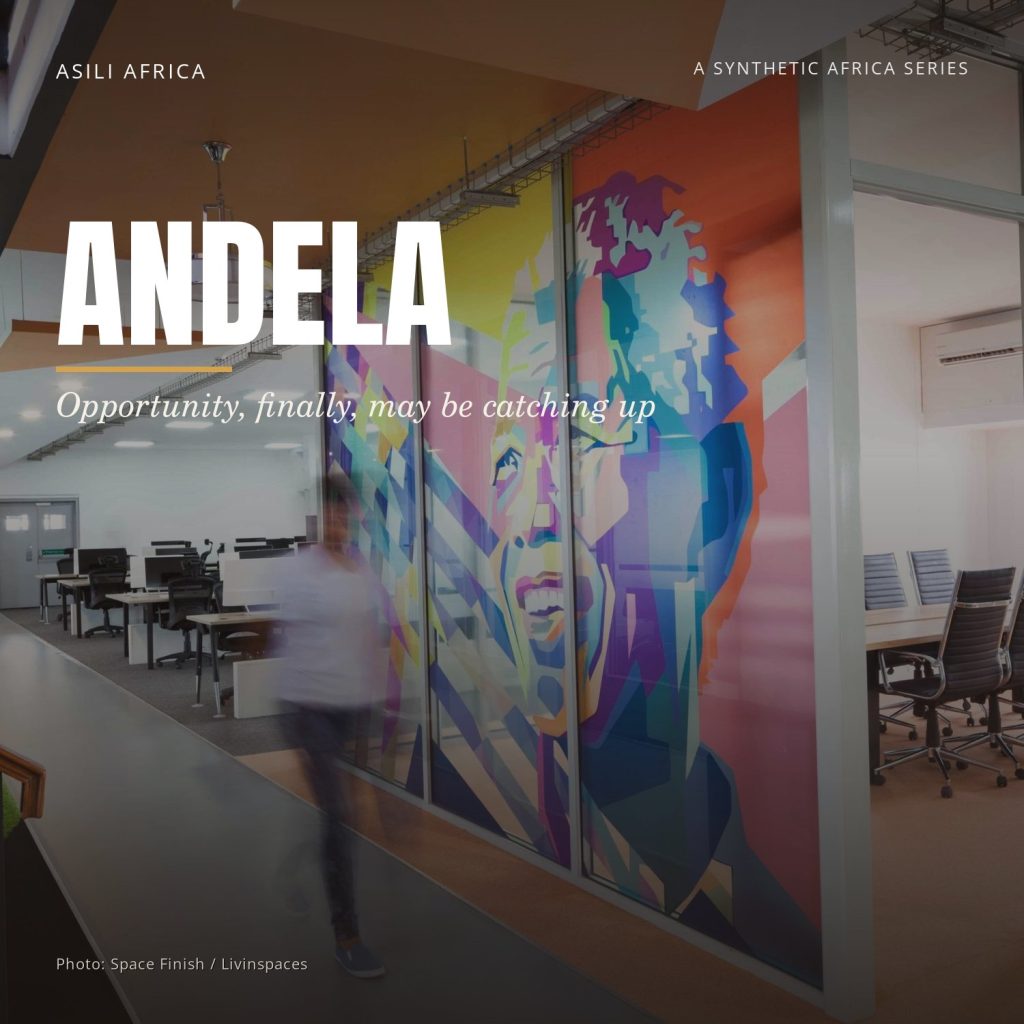
The Andela Story: Training Africa’s developers for the world
In September, twenty nineteen, around four hundred and twenty junior software developers across Nigeria, Kenya and Uganda opened their inboxes and read the same email.
Andela — the company that had recruited them out of university, paid their salaries through a four year training fellowship, put them in beautiful offices in Lagos, Nairobi and Kampala, and told them they were the proof that brilliance was evenly distributed around the world — was letting them go.
Two hundred and fifty across Nigeria and Uganda. One hundred and seventy across Kenya. In one day. By email. The fellowship that had defined the company since its founding was over. The model the world had celebrated was finished.
This is the story of an idea so good it raised three hundred and eighty one million dollars in seven years, made the Chan Zuckerberg Initiative write its first major investment check, became Africa’s most famous startup — and then quietly tore itself apart, twice, to survive.
This is Asili Africa. This is the story of Andela.
The Boys’ Quarters
To understand Andela, you have to begin with a different company. One that failed.
In twenty thirteen, a young Nigerian named Iyinoluwa Aboyeji — known to almost everyone as “E” — was twenty two years old and trying to build a distance learning platform for African universities. He called it Fora. He had three co-founders working alongside him. Nadayar Enegesi, a Nigerian-Canadian who had just graduated from the University of Waterloo. Brice Nkengsa, a Cameroonian software engineer. And Ian Carnevale, an American who handled product.
Fora was modelled on an American company called two U, which had built a profitable business taking traditional universities online. So when Aboyeji and his team needed advice, they reached out to two U’s co-founder, an American education entrepreneur named Jeremy Johnson.
For most of twenty thirteen and the early months of twenty fourteen, Fora struggled. The team could not raise the capital it needed. The regulatory environment for higher education in Africa was suffocating. Every country had its own accreditation rules, its own ministries, its own gatekeepers. By the spring of twenty fourteen, the company was effectively dead.
The Fora team went back to Jeremy Johnson with a question they did not know how to answer. What do we do now.
Johnson had just returned from Nairobi. He had given a talk there, at a MasterCard Foundation event, invited by a young American program officer named Christina Sass. And while he was in Kenya, he had been turning an idea over in his mind.
The conventional model of higher education in Africa was broken. Tuition was too expensive for the students who needed it most. Donors could subsidise, but donor money was finite. What if you turned the model inside out. What if, instead of charging students to learn, you paid them. What if you trained them to a world class standard, and then recouped the cost by renting their labour to companies that needed it.
It was a radical inversion. The students became the asset. The training was the product. The customer was not the learner. The customer was a Fortune five hundred company in California that needed a senior backend engineer and could not find one fast enough.
Johnson walked the Fora team through it. They killed Fora. They formed a new company, with Johnson and Sass joining as co-founders. They named it after Nelson Mandela.
They called it Andela.
The founding bet was a single sentence, repeated in every press interview, every investor pitch, every recruitment poster, for the next decade. Brilliance is evenly distributed around the world. Opportunity is not.
In May, twenty fourteen, Andela posted its first call for applications. It went out on Twitter. The recruitment cycle was held in a boys’ quarters — the small annex behind a Lagos house, a kind of building Nigerians of a certain class know well, a one room outbuilding behind the main house, originally built for live-in domestic staff. The first Andela cohort interviewed in that boys’ quarters. Seven hundred Nigerians applied for four spots.
The four who made it became Cohort One. They moved into a shared house. They were paid a modest monthly salary. They were given a curriculum that would have been recognisable to any Silicon Valley engineering team — JavaScript, Ruby, Python, the full modern web stack. And they were told that, within months, they would be working remotely for an American company that had no idea they were sitting in Lagos.
It was a strange thing to promise. In twenty fourteen, the idea of a Fortune five hundred company hiring a fresh graduate from Nigeria to write production code for them was not just unusual. It was, to most American hiring managers, unimaginable. The Fora team had spent a year discovering how hard it was to sell African education to Africans. Now they were going to sell African talent to America.
The bet was not just on the developers. It was on the assumption that an American company, given the option, would care more about the quality of the code than the colour of the engineer who wrote it.
The Signal from Menlo Park
For the first two years, Andela did what every early stage company does. It grew slowly. It signed clients carefully. It iterated on the curriculum.
The fellowship was four years long. Six months of intensive training. Then three and a half years of paid placement with an American company, embedded full time, working remotely from a beautiful Lagos office that the company built to look like the kind of place a Silicon Valley engineer would feel at home in. Whiteboards. Standing desks. Bean bags. Standup meetings on schedule.
In June, twenty fifteen, Andela raised its first institutional round. Ten million dollars in a Series A, led by Spark Capital in Boston. The same firm that had backed Twitter and Tumblr. A later filing with the United States Securities and Exchange Commission showed the actual figure was fourteen point six million dollars. Either way, it was the largest Series A any African startup had raised at that point.
Andela opened a Nairobi office that same year. Then Kampala in twenty seventeen. The applicant pool grew. By the second year of recruitment, the acceptance rate was below one percent. Andela was, by its own count, more selective than Harvard.
And then, in June, twenty sixteen, something happened that changed African tech forever.
Mark Zuckerberg and his wife Priscilla Chan had launched a new investment and philanthropy organisation, the Chan Zuckerberg Initiative, only a few months earlier. It had not made a single major investment yet. The world was watching to see what its first big bet would be. Climate. Education. Health.
The first major check went to Andela. Twenty four million dollars. Series B.
For the African startup ecosystem, the signal was atomic. If the founder of Facebook had decided that the most important early bet his new organisation could make was on training African software engineers, then the entire continent was investable. American capital began arriving in Lagos and Nairobi in volumes that had not been seen before. Every Nigerian fintech and every Kenyan agritech that raised a round in the following three years owed at least part of its story to the credibility Andela had just been handed.
In the middle of all this, one of Andela’s co-founders made a quiet decision. Iyinoluwa Aboyeji, who had recruited the first cohort out of the boys’ quarters in Lagos, left Andela in twenty sixteen to co-found a payments company. He called it Flutterwave. It would, a few years later, become the first African fintech unicorn.
Andela kept going. A Series C of forty million dollars in October, twenty seventeen, led by C R E Venture Capital. A Series D of one hundred million dollars in January, twenty nineteen, led by Generation Investment Management — the firm co-founded and chaired by former United States Vice President Al Gore. That round valued Andela at seven hundred million dollars. The fellowship had trained hundreds of African engineers. The first two cohorts had completed the full four year programme and graduated. Andela had become, on paper, the most successful African startup of its generation.
But underneath the cap table, something was breaking.
The fellowship model was beautiful on the recruitment poster. It was expensive on the balance sheet. Andela paid salaries to its fellows for years before those fellows generated meaningful revenue. The training pipeline was capital intensive. And the demand on the other side of the marketplace, the demand from American companies, was starting to change shape.
For years, American tech firms had paid Andela for junior engineers. Bright graduates who could write production code under supervision. By twenty eighteen, the American market was flooded with junior engineers of its own. Lambda School had opened. Flatiron had scaled. The bootcamp industry was producing tens of thousands of newly trained American developers a year. The price for junior engineering talent in the United States was collapsing.
What American clients now wanted was different. They wanted senior engineers. Mid-level engineers. People with five and seven and ten years of experience, who could be trusted to ship without oversight. And Andela’s fellowship, by design, did not produce those people. It produced juniors. Brilliant juniors. But juniors.
The product was world class. The market had moved.
Inside Andela’s headquarters in Lagos, and inside its leadership offices in New York, the same conversation began to be held, in quieter and quieter voices. The fellowship was not working. Not at the scale the cap table required.
Something was going to have to give.
The Three Cuts
The decision came in September, twenty nineteen.
Andela cut around four hundred and twenty junior developers. Two hundred and fifty across Nigeria and Uganda. One hundred and seventy across Kenya. In one day. By email. Most of them found out the same way the rest of the world did — by reading TechCrunch.
The fellowship, the four year salaried training programme that had been the company’s signature product since twenty fourteen, was effectively over. Andela would, from this day forward, place senior engineers only. The juniors who had structured their early careers around the promise of an Andela placement would have to compete on the open market, in countries where the Andela name was a credential to other Andelans but not to anyone else.
The reaction across the African tech press was sharp. TechCabal in Lagos. Quartz Africa in Nairobi. African Business in London. The same question was asked in different words. Was Andela ever a development mission. Or was it always a labour arbitrage play that had simply marketed itself in the language of mission.
Andela’s leadership called it right sizing. The market had moved upmarket. The company had to move with it. There was, the leadership said, no other way.
Whatever you call it, it was the moment Andela had to choose between the story it told the world and the cap table it had built. It chose the cap table.
Eight months later, the world chose for it again.
In May, twenty twenty, COVID had reached every African capital. Andela cut a further one hundred and thirty five staff, around ten percent of the company. Senior employees took pay cuts. The cuts were spread across Lagos, Nairobi, Kampala, Cairo, and the New York office. Christina Sass, the co-founder who had been Andela’s President from day one, had already stepped away from operational leadership the year before. Now most of the team that had been the company’s first decade was gone too.
In June, twenty twenty, the second pivot came. Andela closed every one of its physical African offices. Lagos. Nairobi. Kampala. Kigali. Cairo. Accra. The beautiful Silicon Valley styled spaces that had been the company’s recruiting weapon for six years were emptied. The furniture was sold. The keys were handed back.
Andela became a fully remote company. The official framing was that this was the future of work, that the pandemic had simply accelerated a transition Andela was already planning. The framing was, in places, true. It was also true that going remote meant Andela never had to pay for a Lagos lease again.
In April, twenty twenty one, the third pivot came.
Andela announced it would no longer recruit only in Africa. The application process opened in thirty seven new countries. Within six months, Andela’s engineer pool included developers in eighty countries on four continents. The company that had been founded on a single sentence about African brilliance was now sourcing from Brazil and Egypt and the Philippines and Pakistan.
By the time the dust settled, the company looked nothing like the one Jeremy Johnson and Christina Sass had launched in a Lagos boys’ quarters in twenty fourteen. The fellowship was dead. The offices were closed. The Africa-only mandate was gone. The co-founders had, with one exception, all moved on.
But the model — the new model, the senior only, fully remote, globally sourced model — was the one Andela’s investors had been quietly asking for since at least twenty eighteen.
Six months later, Andela became a unicorn.
From Roster to Platform
In September, twenty twenty one, SoftBank’s Vision Fund Two led a two hundred million dollar Series E into Andela. The round valued the company at one and a half billion dollars. Andela was, formally, a unicorn.
The investor list was a who’s who of the global venture economy. Whale Rock joined as a new investor. The Chan Zuckerberg Initiative, Generation Investment Management, and Spark Capital all followed on. At the time, Andela was only the second non fintech African unicorn in history.
The headlines wrote themselves. African tech had its global validation. The Andela story, the press said, was vindication for the entire idea of African venture investing.
The footnote that the press did not write quite so loudly was that Andela was, by the time of the round, no longer really an African company. It was headquartered in New York. It had no offices in Africa. Its engineers, while still concentrated in Nigeria, Kenya, Egypt and South Africa, were now spread across more than eighty countries. Its largest clients were in California and London.
But the company had survived. The revenue line told the survival story better than any press release. In twenty nineteen, around the time of the layoffs, Andela had confirmed annual revenue of fifty million dollars. By twenty twenty four, that figure was around two hundred and sixty four million dollars. The pivots had worked.
Andela used the SoftBank money for two things. The first was scale. By twenty twenty three, the engineer pool had crossed one hundred and fifty thousand people across one hundred and thirty five countries. The company was no longer in the business of training engineers. It was in the business of matching them.
The second use of the money was acquisitions.
In March, twenty twenty three, Andela bought a company called Qualified — an American technical skills assessment platform that had also built a developer community called Codewars, with around three point six million engineers practising coding problems every month. Qualified gave Andela something it had never had at scale before. A way to vet a candidate’s actual coding ability, fast, at the moment of intake, without sending a recruiter to interview them.
Around the same time, Andela launched its Talent Cloud — a software platform that used machine learning to match its hundred and fifty thousand engineers to incoming client requests. Where the first generation of Andela had been a kind of staffing agency, with recruiters phoning candidates and clients faxing job specs, the second generation was a marketplace. Algorithmic. Self serve. Faster.
The business model had shifted again, quietly this time, without a press release. Andela was no longer selling a fellowship. It was no longer selling a roster. It was selling a platform. And the platform, increasingly, was the product.
By the end of twenty twenty four, late stage investors were being shown a different Andela. Revenue growing. Margins improving. Net retention of around one hundred and twelve percent. A management team that, increasingly, talked the language of public company readiness — pricing discipline, utilisation targets, customer acquisition cost.
The fellowship had been a story about Africans. The platform was a story about engineers, anywhere. The pitch deck had changed, and so had the audience for it. Andela was no longer pitching itself to philanthropists and impact investors. It was pitching itself to the public markets.
The Operator
In August, twenty twenty four, Jeremy Johnson stepped down as Andela’s chief executive. He had been C E O for ten years. He was the last of the six original co-founders still in operational leadership. He moved to the board.
His replacement was an American executive named Carrol Chang. She came from Uber, where she had been Global Head of Driver and Courier Operations. She had no African background. The press release named the reason for the hire plainly. Andela was being prepared, the board said, for a public listing.
The acquisitions kept coming. In January, twenty twenty six, Andela bought a company called Woven — a human powered technical assessment business that, layered on top of Qualified, gave Andela one of the deepest engineer vetting capabilities of any talent marketplace in the world. The thesis was specific. As artificial intelligence began to substitute for some kinds of junior engineering work, the only way for a company like Andela to defend its margins was to focus on the hardest, most expensive, most senior engineering talent — and to be the world’s most accurate judge of who that talent actually was.
A new product line was launched. Andela began offering what it called Forward Deployed Engineers. Small teams of senior engineers embedded directly inside enterprise A I labs. The pitch was unsubtle. If your company is racing to ship A I products and you cannot hire fast enough in San Francisco, Andela will put a team next to your team, anywhere in the world, by next month.
The Andela of twenty twenty six is unrecognisable from the Andela of twenty fourteen. The fellowship is a memory. The boys’ quarters in Lagos is a footnote. The continent that gave the company its name is now one source among many.
But the trajectory the company is on is the one its cap table has wanted since twenty nineteen. A global marketplace, A I native, headquartered in New York, run by an Uber operations executive, marching toward a stock exchange listing somewhere in the second half of the decade.
The empire has scaled. The origin is contested. The two facts are not in tension. They are the same fact.
And yet.
In ten years of operation, Andela trained roughly one hundred and ten thousand Africans through its fellowship and its broader learning community programmes. Its alumni built Flutterwave and Paystack and Eden Life. They populate the engineering teams of every major Nigerian and Kenyan tech company. Whatever Andela is now, for one decade it was the largest informal computer science programme the continent has ever had.
Brilliance, as the poster always said, is evenly distributed. Opportunity, finally, may be catching up.
This is Asili Africa. Every empire has an origin.
Key Takeaways
- The Boys’ Quarters. To understand Andela, you have to begin with a different company.
- The Three Cuts. The decision came in September, twenty nineteen.
- From Roster to Platform. In September, twenty twenty one, SoftBank’s Vision Fund Two led a two hundred million dollar Series E into Andela.
- The Operator. In August, twenty twenty four, Jeremy Johnson stepped down as Andela’s chief executive.
Also available on YouTube — search “Asili Africa” or subscribe to our channel.