
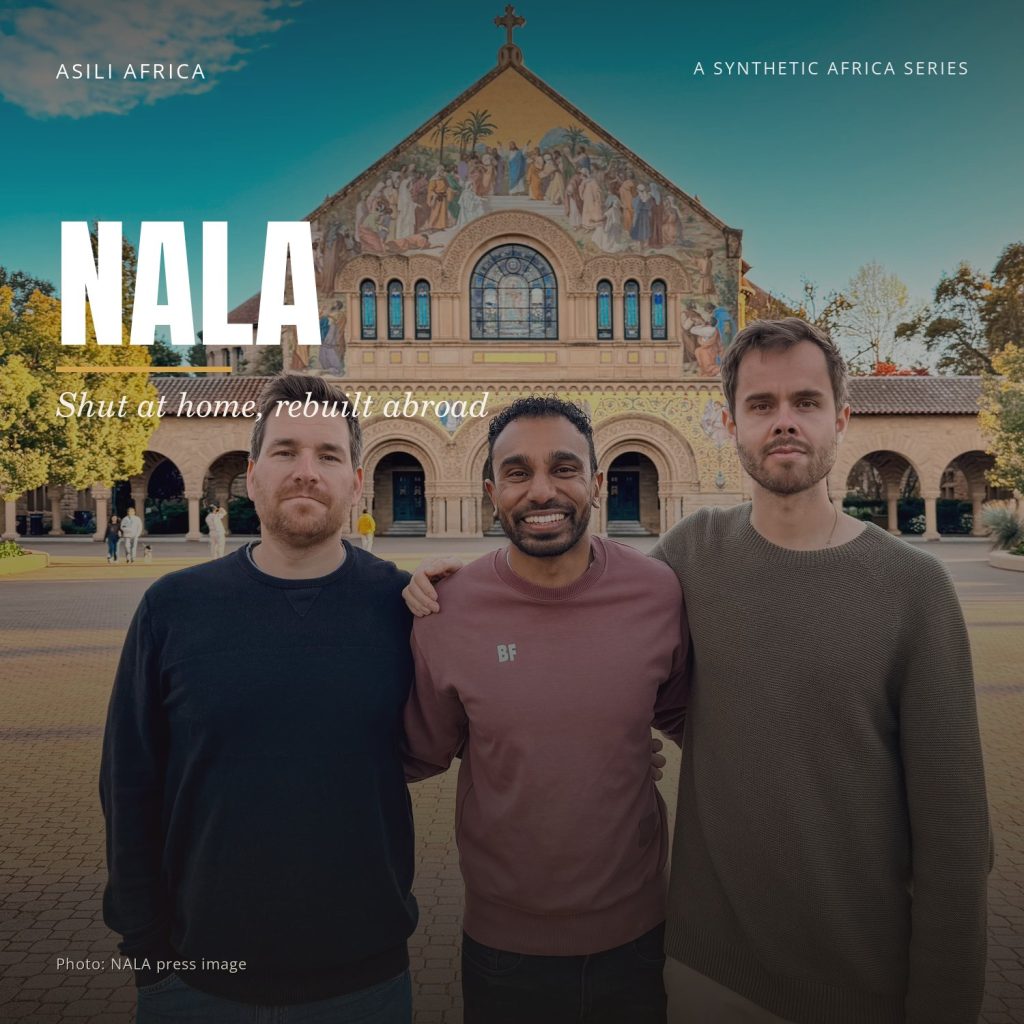
The NALA Story: Benjamin Fernandes
In March, twenty nineteen, a twenty six year old Tanzanian founder named Benjamin Fernandes opened his laptop in Dar es Salaam and read an email he had been chasing for three years. Y Combinator, the Silicon Valley accelerator that had passed on him four times in a row, was finally inviting him in. NALA, his small mobile money app, would be the first East African fintech ever admitted to the programme.
Days later, a second email arrived. This one was from the country’s largest mobile money operator. It was a cease and desist. It accused NALA of stealing customer PINs.
The day after that, a third document arrived. It was from the Bank of Tanzania. It ordered the app shut.
Inside one week, the company Benjamin Fernandes had built in his parents’ living room — the app that had reached the top of the Tanzanian Play Store, the app that was about to fly its founder to Mountain View — was effectively dead in its home market. He laid off his team. He ran out of money. He started again.
This is the story of how a Tanzanian sports television broadcaster, with a twenty thousand dollar prize and a Stanford degree, built a remittance app, watched the regulator kill it, rebuilt it in London pointed in the opposite direction, and is now trying to put the entire cross-border payment system of Africa onto stablecoin rails.
The Broadcaster Who Went to Stanford
To understand NALA, you have to begin in Dar es Salaam, in the home of a Tanzanian pastor and his wife.
Benjamin Fernandes was born on the twenty fifth of November, nineteen ninety two, in Tanzania’s largest city. His father, Vernon Fernandes, was a pastor. His mother, Anny, ran the household. The family put their son through Haven of Peace Academy, a private school overlooking the Indian Ocean, on a scholarship. He was not, in the conventional sense, a child of money.
What he was, from very early on, was a presence on television.
At the age of seventeen, Benjamin started working at Agape Television Network, where his father served as a director. Within a few years he had moved into national broadcasting. In the summer of twenty twelve, at the age of nineteen, he covered the London Olympic Games for Tanzanian national television, becoming one of the youngest national sports presenters in the country’s history. He would later host on CNBC Africa, on Clouds Television, and on TV1 Tanzania. Long before he was a fintech founder, Benjamin Fernandes was, to the average Tanzanian, the calm face on the sports desk.
The pivot from broadcasting to business school was not obvious. In twenty fourteen, the Stanford Graduate School of Business announced a new programme called the Africa MBA Fellowship. It would fund eight African students through Stanford’s two year MBA on full scholarships worth roughly one hundred and sixty thousand dollars each. Roughly eight thousand Africans applied. Benjamin Fernandes was one of the eight selected. He was the first Tanzanian ever to receive it.
He arrived in Palo Alto in the autumn of twenty fifteen. By the summer of twenty sixteen, he was interning at the Bill and Melinda Gates Foundation, on the Financial Services for the Poor team, in Seattle. That was where he saw, up close, the data on how broken mobile money was for the people who actually used it.
The product the Gates Foundation team was studying — and the product Benjamin Fernandes himself had been using since secondary school — was USSD. The Unstructured Supplementary Service Data menu. The flickering green text-only interface every African mobile money user remembers, the one accessed by dialling a star, a number, a hash, and then navigating, by typing single digits, through nested menus. To send money from a Vodacom M-Pesa account in Tanzania required, in the late twenty tens, as many as forty six keystrokes. The phone number. The amount. The PIN. The confirmation. Forty six chances to make a mistake. Forty six reasons the average user would just hand the phone to a younger relative who could navigate it faster.
Benjamin’s thesis was simple. The technology was fine. The interface was broken. If somebody built a clean app on top of the USSD rail, the same way Robinhood had built a clean app on top of brokerage rails, hundreds of millions of African mobile money users would adopt it within a year.
In June twenty seventeen, he graduated from Stanford. On graduation day, he won the Frances and Arjay Miller Award for Social Innovation. The prize was twenty thousand dollars. He took the money home to Dar es Salaam and put it directly into the company.
That summer he flew to Seattle to meet an engineer named Sam Castle, an early career fintech developer he had been introduced to through the Gates Foundation network. They agreed to build the first version together. Sam would write the code from Seattle. Benjamin would handle the product, the regulatory work, and the market in Dar es Salaam. The first office was the family living room.
A few months later, in October twenty seventeen, Benjamin received another piece of news. He had been admitted to a Harvard Kennedy School executive programme on a full scholarship. He was the youngest person ever accepted. He flew to Cambridge, completed the programme, and then flew back to Tanzania to keep building the app.
The product he and Sam Castle launched was called NALA. The Swahili word for gift. The promise was clean. Send money on Tanzanian mobile money in ten seconds, instead of forty six digits. Works offline. Works on a basic Android phone. Free for the user.
Number One, Then Zero
The first version of NALA launched commercially in Tanzania in early twenty eighteen. It was, as a piece of consumer software, a quiet miracle. A user could send money to another mobile money account in about ten seconds. The app worked offline. It did not require an internet connection. It ran on the cheapest Android phones available in Dar es Salaam.
The market noticed immediately.
Inside a year, NALA had climbed to number one on the Tanzanian Google Play Store. The download counter crossed one hundred thousand users. The product was not yet making any money, but the founder had built something with the clearest possible signal of consumer demand — the one signal that, in twenty eighteen, was supposed to open every door in Silicon Valley.
The door Benjamin Fernandes wanted opened was Y Combinator.
He applied. He was rejected. He applied again. He was rejected again. He applied a third time. Rejected. He applied a fourth time. Rejected. By twenty nineteen, four of his applications had been declined. The fifth one was accepted.
NALA would be the first East African fintech ever admitted to the Y Combinator programme. The acceptance email arrived in early twenty nineteen. Benjamin Fernandes booked a flight to Mountain View.
Days later, a different email arrived in his inbox. It was from Tanzania’s largest mobile money operator — widely reported as Vodacom M-Pesa, the country’s dominant incumbent. It was a cease and desist. The allegation was that NALA was, in some way, stealing customer PINs. NALA, then and since, has consistently denied that allegation. The product had been built specifically not to handle PINs in the way the cease and desist described.
The denial did not matter. The cease and desist had triggered a chain reaction.
The Bank of Tanzania, the country’s central bank and the regulator of mobile money, issued a shutdown order. NALA’s connection into the M-Pesa rail was the connection that made the product work. Without it, there was no product. Within hours, the number one app on the Tanzanian Play Store stopped functioning for almost every user it had.
The financial impact was immediate. NALA had no revenue. It had been operating on what was left of the Miller prize money, a small seed cheque from the Y Combinator standard one hundred and twenty five thousand dollar investment, and whatever Benjamin and Sam Castle had not yet spent on engineering. The runway was measured in weeks. Without an operating product, there was no path to a revenue line.
Benjamin Fernandes did what every founder in his position has had to do at least once. He laid off his team. He explained to each of them, individually, what had happened. He kept seven staff. The company was, in operational practice, dead.
He flew to Mountain View for the Y Combinator batch anyway. He sat through demo day with no live product, no revenue, and no path back into the Tanzanian market that had defined the company until that week. The investors he spoke to, almost universally, asked the same question. What now?
What he told them, and what NALA’s own public storytelling has subsequently elided, was that he intended to relaunch the company outside Tanzania. Domiciled somewhere else. Pointed in the opposite direction. He would still serve African mobile money users. He would just no longer try to do it from inside an African market that had now made the cost of doing so unsurvivable.
NALA’s own Our Story page treats twenty twenty one as the founding year of the company. It is a clean editorial choice. It elides the two years between twenty seventeen and twenty nineteen entirely. It allows the company to be presented as a London diaspora remittance app from day one. The truth is that NALA was, for its first two years, a Tanzanian USSD killer that the Bank of Tanzania ordered shut. The decision to elide that period in the official narrative is itself a piece of the story.
London, Pointed the Other Way
The relaunch took eighteen months.
By the time NALA reopened for business in twenty twenty one, it had been re-domiciled in the United Kingdom, with a new operational head office in London and a renewed engineering presence in Nairobi. The product had been rebuilt from the ground up. The market had been inverted. Instead of helping Tanzanians inside Tanzania move money to other Tanzanians, NALA would now help Tanzanians in London move money to family back in Tanzania. The corridor ran the other way. The regulator that mattered was now the Financial Conduct Authority of the United Kingdom, not the Bank of Tanzania. The customers were diaspora workers. The recipients were the same people the original app had tried to serve.
The pivot worked.
By twenty twenty two, NALA had become one of the first African fintechs ever to integrate with both Apple Pay and Google Pay. A user in London could fund a transfer with a tap on the iPhone. The money would land in a Tanzanian mobile money wallet in minutes. The send corridor expanded from Tanzania to Kenya, then Uganda, then Rwanda. The receive corridor expanded into West Africa with Ghana.
In the spring of twenty twenty two, the company closed a ten million dollar seed round. The lead investor was Accel — the same firm that had backed Facebook, Slack, and Spotify at the seed stage. Amplo, Bessemer Venture Partners, and Y Combinator co-invested. The angel investor list read like the founders’ Hall of Fame of the past decade of consumer fintech — Vlad Tenev of Robinhood, Alex Bouaziz of Deel, Tom Blomfield of Monzo. The narrative had inverted. The Tanzanian founder who, two years earlier, had been rejected by Y Combinator four times in a row was now being co-invested in by the founders of three of the most valuable consumer fintechs in the world.
By twenty twenty three, NALA had extended a remittance partnership directly with the M-Pesa Tanzania business — the same operator that, four years earlier, had sent the cease and desist that ended the original product. NALA was not back in Tanzania as an interior payments app. It was back in Tanzania as a regulated diaspora inflow. The relationship had been formalised. The product was profitable in the corridor and growing.
Inside the building, the language was changing. Benjamin Fernandes had begun, in public talks at the Africa CEO Forum and on the Bae HQ podcast, to speak about NALA not as a remittance app but as the first half of something larger. He was beginning to talk about infrastructure. He was beginning to talk about why African banking rails were unreliable, why mobile money corridors broke under load, why cross-border payments in Africa were, in his words, only one percent built.
What he did not say in public, but what was already happening in the engineering team in Nairobi, was that NALA had been quietly building its own underlying settlement infrastructure for the entire consumer product. It had had to. The available rails were not stable enough to underpin the volume the consumer app was about to do. What had started as a piece of internal plumbing was, by late twenty twenty three, beginning to look like a separate business.
Rafiki
In March, twenty twenty four, NALA announced the product that had been hiding inside the consumer app. They called it Rafiki — the Swahili word for friend. It was a stablecoin-powered cross-border settlement platform. Through a single application programming interface, any global enterprise could collect dollars in the United States or Europe and pay out in twenty plus African and Asian local currencies, in minutes, without operating a pre-funded account in any of them.
The pitch to enterprise customers was direct. The traditional way to settle cross-border payments into Africa required a global payments company to hold pre-funded balances at correspondent banks in each receive country. Those balances cost money to hold. They cost money to top up. They were stranded for days at a time inside banking-hours batches. Rafiki replaced the entire pre-funded model with a stablecoin leg. Dollars in. Stablecoin across. Local currency out, twenty four hours a day, seven days a week, no nostro accounts required.
The architecture had been designed by NALA’s chief technology officer, Nicolas Esteves, who had grown up in West Africa, spent twelve years engineering consumer fintech, and previously built parts of Osper and Monzo. The treasury and corridor operations were run by the chief operating officer, Nicolai Eddy, based in Nairobi, previously at Morningstar.
The market response was immediate.
In July twenty twenty four, NALA closed a forty million dollar Series A. The round was co-led by Acrew Capital and DST Global — the firm Yuri Milner founded and which had previously backed Facebook, Twitter, Airbnb, and Spotify at growth stages. Norrsken22, HOF Capital, and Amplo co-invested. Angel investors included Ryan King of Chime and, again, Vlad Tenev of Robinhood.
The Series A was not, in NALA’s own framing, a remittance round. It was a Rafiki round. The capital was earmarked, almost entirely, to build out the infrastructure business.
Twelve months later, on the eleventh of July, twenty twenty five, NALA disclosed that it had crossed one billion dollars in cumulative remittance volume across Africa and Asia. The Rafiki infrastructure volume, growing on a separate curve, had gone from zero to one billion dollars in eighteen months. Revenue had grown by a factor of ten in the twelve months before the announcement. The company was profitable.
The licence stack expanded in parallel. In September twenty twenty five, NALA entered Kenya through a partnership with Equity Bank and the PesaLink switch. In December twenty twenty five, the Bank of Uganda granted NALA both a Payment Service Provider and a Payment System Operator licence. The headcount, which had collapsed to seven after the twenty nineteen shutdown, was now approaching one hundred staff across London, Nairobi, and Dar es Salaam.
Then, in late October twenty twenty five, the Tanzanian government did something nobody at NALA had budgeted for. During the contested presidential election period, the state ordered a nationwide internet blackout. The shutdown lasted from the twenty ninth of October to the third of November, five days and six hours. NALA’s payment operations into Tanzania stalled for at least eighteen hours. Families in Tanzania could not receive money from loved ones abroad. Some of those families were trying to wire money for hospital bills.
Benjamin Fernandes went public. He criticised the shutdown directly, framing it as harming the very households NALA had been built to serve. The broader blackout cost the Tanzanian economy, by one independent estimate, roughly two hundred and thirty eight million dollars over five days. For the first time in the company’s history, NALA’s role in Tanzania’s economic infrastructure had become politically visible. The product that the Bank of Tanzania had shut down in twenty nineteen had, in twenty twenty five, become a thing the country could measurably feel the absence of.
Pre-Funding the Future
The first half of twenty twenty six has been the busiest stretch in NALA’s history.
In January twenty twenty six, NALA partnered with a stablecoin payments firm called Noah to launch a settlement network targeting what the two companies estimated as an eight hundred and fifty billion dollar annual liquidity gap in Africa-Asia trade. In March twenty twenty six, the Central Bank of Nigeria granted NALA an International Money Transfer Operator licence, with direct integration into the Nigeria Inter-Bank Settlement System. It was the fourteenth global licence on NALA’s wall.
In April twenty twenty six, MoneyGram — for half a century one of the dominant correspondent-banking remittance networks in the world — announced that it would use Rafiki for stablecoin-powered payouts into Africa and Asia. The partner that had once been the obvious competitor was now the headline customer.
In May twenty twenty six, NALA closed a fifty million dollar credit facility from a firm called Liquidity, backed by the Japanese megabank MUFG. The facility starts at twenty five million dollars and scales up to fifty. Its single purpose is to pre-fund the dollar leg of NALA’s stablecoin corridors, so that the local-currency payout can land on the recipient’s mobile money wallet before the dollar settlement clears. The same announcement contained a single, almost casual phrase about NALA building, in Benjamin Fernandes’s words, a “next-generation neobank.”
Where the company goes from here is the open question. The Rafiki book is growing thirty times faster than it was twelve months ago. The consumer book is profitable and approaching half a million users. The licence stack now reaches into the four largest African economies. Fernandes has, since his Stanford years, talked publicly about wanting to take NALA public on the New York Stock Exchange — the first Tanzanian-founded technology company to do so. The Jumia listing of twenty nineteen is the cautionary tale that hangs over that ambition. The Flutterwave indecision of the last three years is the live case study.
Eight years after his parents’ living room, nine years after a twenty thousand dollar Miller prize, seven years after the Bank of Tanzania ended the original product inside a week of Y Combinator accepting it, Benjamin Fernandes is running a profitable, fourteen-licence, two-business fintech company that is openly trying to put the cross-border payment system of Africa and Asia onto stablecoin rails. NALA is no longer a remittance app. It is no longer only an infrastructure provider. It is, in the slow way these things happen, becoming a piece of African economic plumbing.
That is where NALA stands today. A company that was shut by its own regulator in its own city, that rebuilt itself from a different city pointed in the opposite direction, that learned, in the process, that the rails it needed did not exist, and that has spent the last two years building those rails for everybody else. The original product was a gift. The new product is a friend. The market it is building for is the same one it was always for. This is Asili Africa. Every empire has an origin.
Key Takeaways
- The Broadcaster Who Went to Stanford. To understand NALA, you have to begin in Dar es Salaam, in the home of a Tanzanian pastor and his wife.
- London, Pointed the Other Way. The relaunch took eighteen months.
- Rafiki. In March, twenty twenty four, NALA announced the product that had been hiding inside the consumer app.
- Pre-Funding the Future. The first half of twenty twenty six has been the busiest stretch in NALA’s history.
Also available on YouTube — search “Asili Africa” or subscribe to our channel.